The Complete Guide to AI Workflow Automation for Agencies That Need More Margin
A client does not care that your team manually copied campaign notes into three tools before the status email went out. They care that the email arrives on time, answers the obvious questions, and does not contain a mystery number from last month.
That is why agency margin quietly disappears in operations.
In Basis Technologies’ 2026 Advertising Agency Report, inefficient processes (44.1%) and siloed systems (40.4%) topped the list of obstacles agencies face, while 70% of professionals said the work itself has gotten harder over the past two years. The fix is usually not another project-management subscription. It is better Workflow Automation around the dull, repeated steps between selling the work and delivering it well.
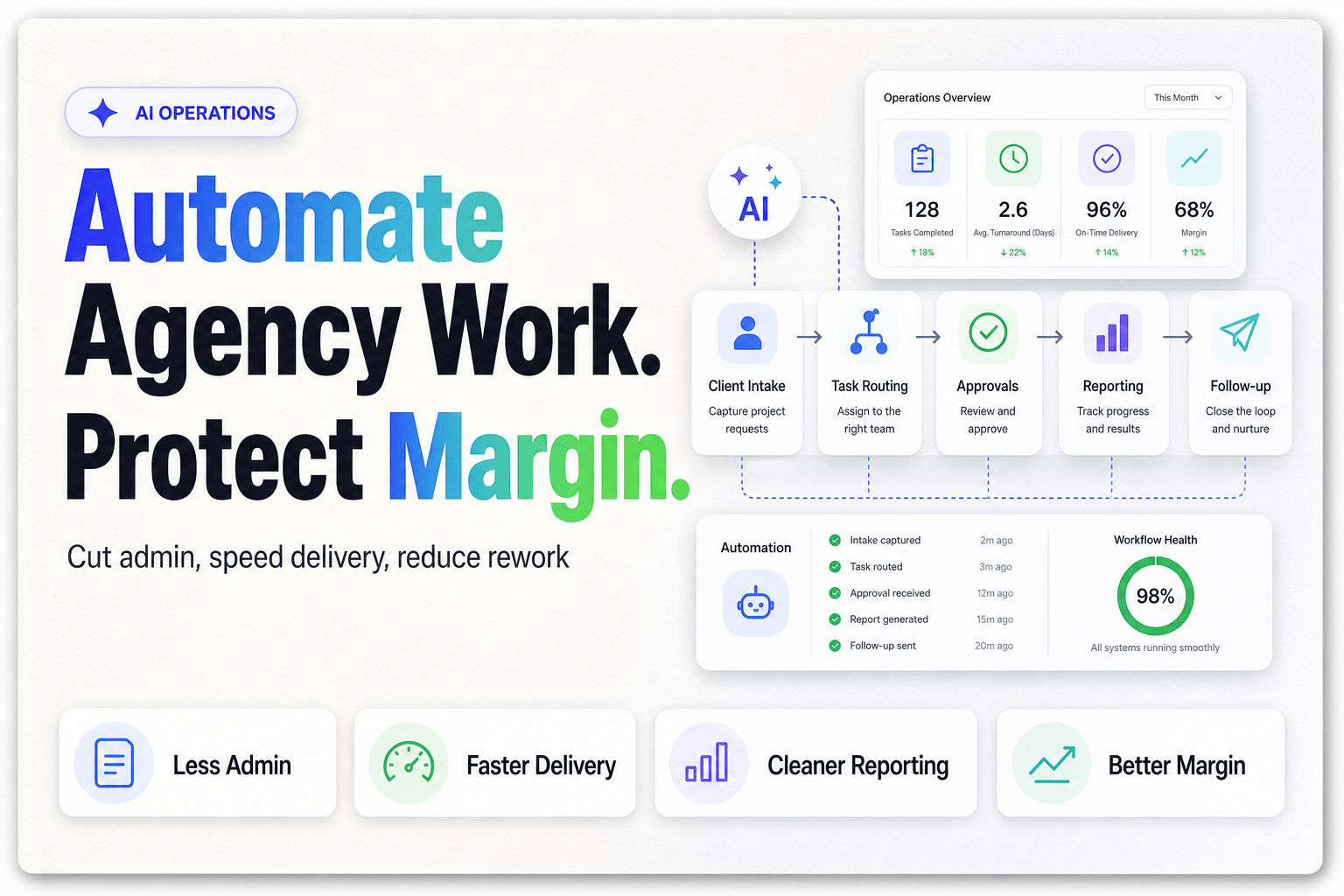
AI workflow automation gives agencies a way to protect delivery quality while removing the admin tax from client intake, task routing, reporting, approvals, and follow-up. Done properly, it does not turn client service into a vending machine. It gives account managers and specialists more room to do the part clients actually pay attention to: judgment.
Stop billing your best people for copying information between tools
Agencies lose margin in small chunks.
A strategist pastes a client request from Slack into a project board. An account manager turns a call recording into next steps. A paid-media specialist chases missing creative. Someone assembles a weekly update from ad platforms, spreadsheets, and half-finished comments in ClickUp. None of these tasks looks catastrophic alone.
Together, they eat the delivery week.
AgencyAnalytics’ 2026 benchmarks survey of nearly 500 agency professionals found that 79% save five or more hours per week with AI, with reporting and performance summaries leading the use cases at 42%. NinjaCat’s 2026 research of 532 marketing leaders adds an important caveat: 91% say AI has streamlined workflows, yet 72% still describe reporting as highly manual. The useful takeaway is not “automate everything.” It is to identify work that repeats at volume, follows recognizable rules, and forces skilled people to play courier.
Start with a 10-day operational audit. Track every handoff that requires someone to:
- Copy the same client details into more than one system
- Ask for a missing asset, approval, login, or deadline
- Translate a meeting into tasks and owners
- Build a recurring status update from standard inputs
- Chase an internal teammate for work that already has a due date
Then calculate the real cost. If an account manager spends 25 minutes per client each week preparing routine updates for 18 retainers, that is 7.5 hours weekly before they add a single useful recommendation. At a loaded internal cost of $55 per hour, the agency is spending roughly $1,650 a month on report assembly and status chasing.
That is a sensible automation candidate.
The goal is not to eliminate the account manager’s update. It is to eliminate the scavenger hunt that happens before the update. Agencies that want a wider menu of repeatable client-ops fixes can use this guide to AI workflow automation for repetitive client operations as a starting inventory.
Client intake should create a delivery plan, not another inbox thread
New-client onboarding often begins with excitement and ends with somebody asking, “Wait, who owns the analytics access request?”
A practical AI Automation system turns intake into a controlled sequence. When a signed agreement, form submission, or kickoff recording arrives, AI Agents can extract the relevant details, compare them against your standard onboarding requirements, and create a draft project plan for human approval.
For a performance marketing agency, that might mean capturing:
- Primary contacts, billing contact, and approval authority
- Services sold, channels included, campaign start date, and reporting cadence
- Required access to ad accounts, analytics, CRM, and creative folders
- Brand restrictions, audience exclusions, legal review needs, and success metrics
The system should write those items into a structured client record, not hide them inside a summary paragraph. That record becomes the source of truth for task creation, reminders, reporting context, and handoffs.
Here is a simple intake flow we would build:
Signed proposal or kickoff form
        ↓
AI extracts fields and flags missing requirements
        ↓
Operations lead approves exceptions
        ↓
Project template creates tasks by service line
        ↓
Owners receive only the tasks relevant to their role
        ↓
Client receives a clear next-step email
The approval step matters. A signed scope that says “SEO support” may mean technical cleanup to one client and four blog posts a month to another. Let the automation draft the plan, then have an operator confirm the commercial reality before work starts.
This is also where CRM Automation earns its keep. The client record should update from prospect to active client only after the right fields are complete. Otherwise, your pipeline reports will announce a win while the delivery team is still hunting for a logo file and a calendar link.
For agencies that need a cleaner framework for operational data, structured data in AI automations explains why clear fields beat beautifully written chaos every time.
Task routing needs rules, not a heroic project manager
The highest-friction moment in delivery is often not creation. It is deciding who does the next piece of work.
A client asks for a landing-page revision. Is it an account-management task, a copy task, a design task, a development task, or all four? Without routing rules, the request lands in a general channel where it gets viewed by nine people and owned by nobody. Two days later, a project manager becomes the human middleware.
That is expensive middleware.
AI Agents can classify incoming client requests, collect missing context, and route work based on service line, priority, client tier, project stage, and available capacity. The agent does not need permission to make final creative decisions. It needs enough information to keep requests from going stale.
A useful routing policy might look like this:
- Requests mentioning tracking errors, broken pages, or live campaign issues go to an urgent queue with a 30-minute acknowledgement target.
- Requests outside the contracted scope get a draft response and require account-manager approval before work is created.
- Approved creative revisions route to the assigned pod with the original brief, current asset link, and client comments attached.
- A blocked task triggers an internal reminder after one business day, then escalates to the project owner after two.
That final rule is where margin protection gets surprisingly tangible. Teams often measure completed work but ignore blocked work. A designer waiting 36 hours for product copy or client approval is still consuming delivery capacity, even if their timesheet says “waiting.”
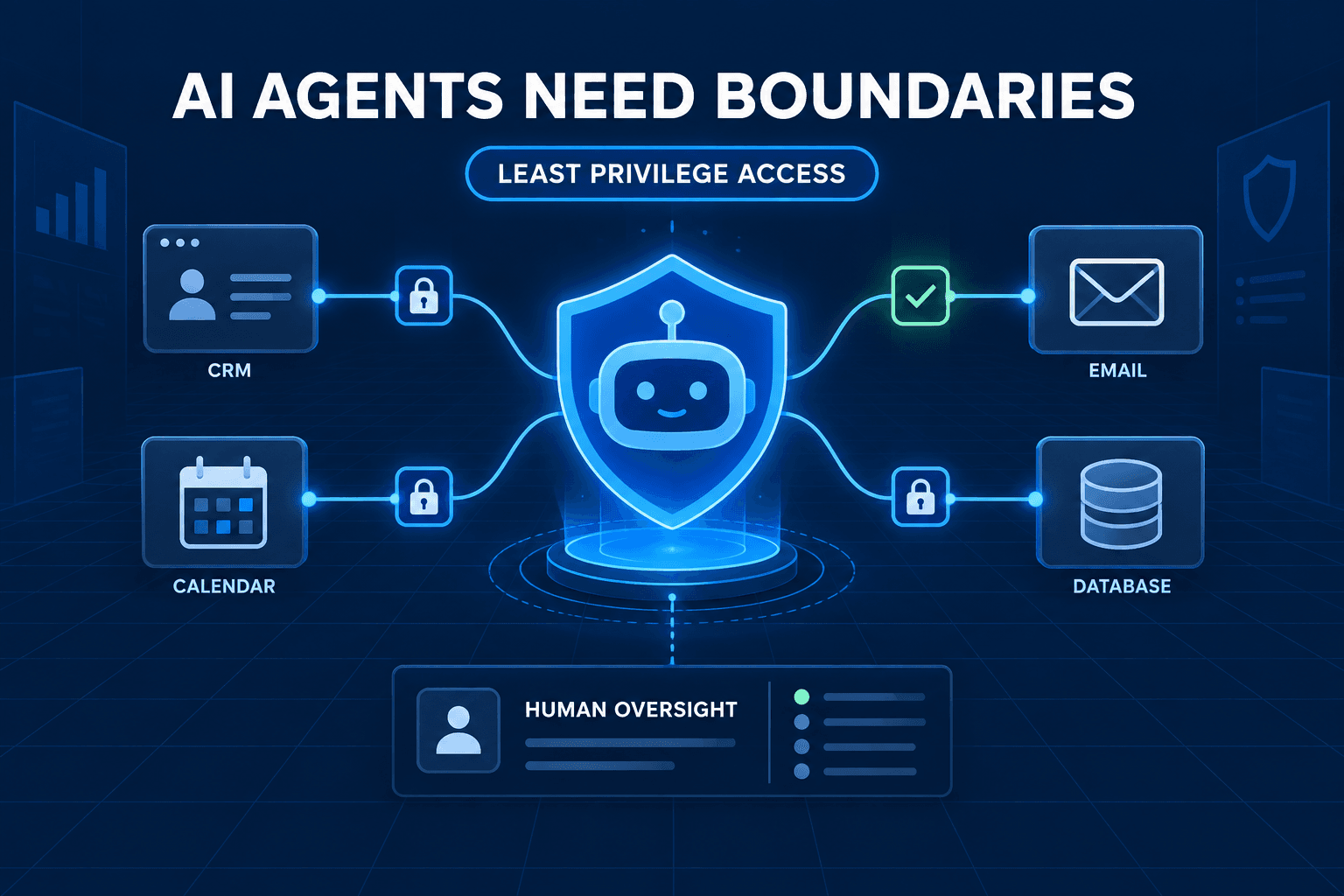
For bigger accounts, Multi-agent Systems can separate intake, classification, task creation, and quality checks. Each agent gets a narrow job and access only to the tools it needs. That is safer than one all-purpose bot with permission to rearrange every client project because it felt ambitious on a Tuesday.
Reporting is where agencies should automate assembly, not interpretation
Reporting is a prime target for AI workflow automation because the first 80% is repetitive and the final 20% carries the client relationship.
Forrester’s 2026 research with 4As found that 74% of U.S. marketing agencies use generative AI to summarize documents and communications, while 70% use it for research and competitive intelligence. Those are useful capabilities, but an automated report that confidently invents a reason for a performance dip is worse than a late report.
We build reporting systems with a hard line between verified data and generated commentary.
The system can:
- Pull approved metrics from ad platforms, CRM records, call-tracking tools, and project data
- Calculate period-over-period changes from a defined formula
- Flag anomalies, such as a 32% drop in form completions or a campaign that spent 90% of budget by mid-month
- Draft a client-ready summary using the agency’s reporting format
- Create an internal review task before anything reaches the client
A strategist then checks the draft, adds the “why,” and recommends the next move. That is the work worth protecting.
For example, the automated draft might say that qualified lead volume fell 18% month over month, while cost per lead rose 11%. The human reviewer can connect that to the client’s paused promotion, a tracking outage, a change in lead qualification rules, or a competitor entering the auction. Data alone cannot know which explanation is true.
If your team is still starting reports with browser tabs and wishful thinking, build a repeatable AI-powered reporting system before attempting a full agency operating overhaul.
The fastest way to waste margin is automating a messy process faster
Here is the mildly unpopular part: most agencies do not need an AI agent that runs client delivery end to end.
They need a process that has an owner, a source of truth, clear exceptions, and a few rules people will actually follow.
Forrester and 4As’ 2026 agency research found that accuracy and bias concerns now top the barriers at 63%, followed by legal risk (62%) and privacy and security (55%). NinjaCat’s 2026 maturity study found that only 8% of marketing leaders orchestrate multi-step AI workflows across tools and teams. That gap makes sense when processes involve sensitive client data, vague scopes, unapproved tools, and output nobody is assigned to review.
What actually goes wrong in agency automations?
The automation works from bad inputs
If campaign naming conventions vary by client, task statuses mean different things across pods, and briefs live in scattered documents, the system will create polished confusion. Fix the fields first.
Teams automate exceptions before the common path
A workflow should handle the normal 70% to 80% of cases before it tries to solve every unusual client request. Build the path for a standard monthly report before automating the one client that wants it as a narrated spreadsheet with seven custom tabs.
No one owns the failure queue
Every automated workflow needs an exception queue. A missing access credential, duplicate project, unclear request, or failed integration should create a visible task with a named owner. Silent failure is the enemy.
Agencies keep charging only for hours saved
Efficiency becomes a pricing problem if your retainer is built entirely around visible labor. Forrester’s 2026 agency research found that 61% of agencies still treat AI as a cost of business. Keep the savings, yes. Then reinvest part of them into faster insight, more testing, better client communication, or a higher-value service package.
The client should feel the difference in outcomes, not receive a discounted version of the same old process.
Margin improves when the operating system gets more reliable
Automation does not create margin by itself. It creates room.
Room for an account manager to catch a client concern before renewal. Room for a strategist to investigate why lead quality changed. Room for a creative team to produce better work because they are not spending Friday afternoon renaming files and chasing approvals.
There is a reason Adobe’s 2026 AI and Digital Trends research found that only 44% of organizations have a measurement framework for generative AI, and just 31% have one for agentic AI, while 52% say they struggle to demonstrate measurable returns. The technology is easy to buy. Connecting it to a measurable operating problem takes more care.
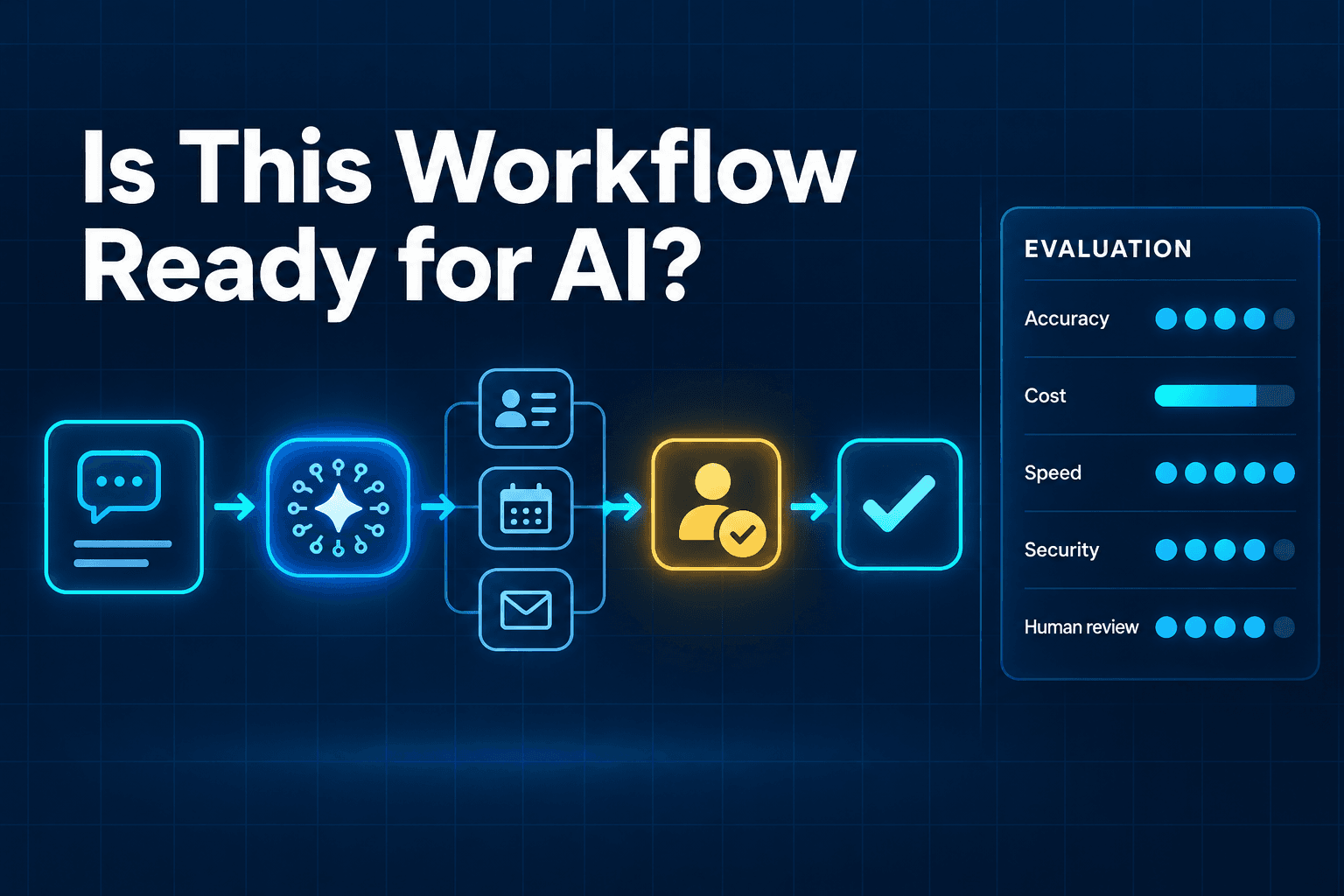
Pick one service line. Map its client journey from signed proposal to monthly renewal. Find the repeated handoffs, the missing-data moments, and the internal follow-ups that make good people feel like clerks. Then build the workflow around those points, with human review where client trust is on the line.
AI-Automated designs custom AI Agents, CRM Automation, and cross-tool workflows for agencies that want better delivery without adding admin headcount. Schedule a consultation to identify the client-ops bottleneck costing your agency the most margin, then turn it into a system your team will actually use.