Structured Data Powers Better AI Automations
What usually breaks an AI automation first? Not the model. Not the prompt. Not even the integration.
It’s the data shape.
When a lead source writes “United States,” another writes “USA,” and a third writes “us,” your shiny automation is already one bad branch away from sending the wrong follow-up, routing the wrong rep, or creating three CRM records for the same person. That’s why structured data is the quiet advantage behind reliable AI Automation. Recent research from Cloudera and Harvard Business Review Analytic Services found that only 7% of organizations say their data is completely ready for AI, and 73% say they should prioritize AI data quality more than they currently do.
That gap is where good automations go to die.
The good news is that structured data is fixable. In practice, it’s often the difference between an assistant that gives interesting answers and a system that actually updates the CRM, qualifies leads, books appointments, and routes work without creating fresh chaos.
The real bottleneck is not the model, it’s the field mapping
Most teams assume AI gets smarter as soon as they plug in a better model. We’ve found the opposite. Once a workflow moves from demo to production, the model becomes only one layer in a larger system. The real bottleneck is whether the automation can reliably understand the business context around it.
That context usually lives in structured fields:
- lead source
- service type
- urgency level
- appointment status
- owner
- deal stage
- approval state
If those values are inconsistent, missing, or dumped into free text, the automation has to guess. Guessing is fine for brainstorming a caption. It is a terrible way to run CRM Automation or lead qualification.
This is why so many AI projects feel impressive in testing and annoying in daily use. According to the Alteryx 2026 State of Data Analyst report, analysts spend 5.7 hours per week preparing and cleaning data, plus 3.7 hours per week checking and correcting AI outputs. That’s more than a full workday every week spent cleaning up what the system should have handled.
Structured data reduces that tax.
Instead of asking AI to infer everything from a messy paragraph, you give it a predictable frame:
| Data element | Messy version | Structured version |
|---|---|---|
| Lead urgency | “Need this fixed ASAP, maybe today” | urgency = high |
| Service type | “Probably plumbing, maybe leak detection” | service_type = leak repair |
| Budget fit | “We can spend around 5k if needed” | budget_range = 2500-5000 |
| Next step | “Call me later this week” | follow_up_window = 3_days |
That’s not glamorous. It is, however, how automations stop acting like interns on their first day.
If the AI has to interpret everything, you already lost some accuracy
Unstructured text matters. Calls, emails, forms, and notes are where the raw signal lives. But the best automations do not leave that signal unorganized for long. They convert it into clean variables the rest of the workflow can act on.
Think about a service business handling inbound requests. A prospect submits a form that says, “My AC died, I’m in Phoenix, rental property, tenant is furious, call ASAP.” A useful system does not just summarize that text. It extracts and stores:
service_category = HVAClocation = Phoenixproperty_type = rentalurgency = emergencycontact_role = property_owner or managerrecommended_route = after_hours_dispatch
Now your AI Agent can do real work. It can route the request, trigger the right response template, update the CRM, and escalate based on rules.
This is the same logic behind a strong AI lead intake system that routes, scores, and responds automatically. The win is not “AI answered the message.” The win is that the workflow turned messy input into structured action.
In manufacturing, the same pattern shows up at a larger scale. The Manufacturing Leadership Council’s 2025 AI survey found that 62% of respondents cited data that is not formatted or structured for AI use as a major obstacle, and 49% pointed to poor data quality. Different industry, same problem: if the inputs are loose, the automation stays fragile.
For small businesses, that usually shows up as:
- duplicate records
- wrong routing rules
- broken follow-up sequences
- unreliable reporting
- AI outputs that need constant human correction
That last part matters more than people admit. A workflow that saves 20 minutes but creates 30 minutes of cleanup is not automation. It’s admin cosplay.
Don’t ask AI to be your database
Here’s the mildly contrarian part: a lot of teams use AI to compensate for broken operations instead of fixing the structure underneath them.
They expect the model to remember lead state, infer missing fields, resolve duplicates, and decide what the business “probably meant.” That works right up until volume increases.
AI is not your database. It is not your source of truth. It should not be the only place a key business fact exists.
What actually works is a split of responsibilities:
Let AI handle
- extraction
- summarization
- classification
- drafting
- recommendation
Let structured systems handle
- record state
- ownership
- routing logic
- status changes
- reporting fields
- audit history
This is where Workflow Automation becomes much more reliable. A voice or chat interaction can stay conversational on the front end while the back end remains rigid where it matters. That is especially important in Voice AI flows, where customers speak naturally but the business still needs clean values like appointment type, service area, and call outcome. If that’s your use case, 7 mistakes to avoid when deploying Voice AI for inbound calls is worth reading before you let a phone bot freestyle its way into your CRM.
The “AI will figure it out” approach also ignores a hard lesson from real-world failures. A recent TechTarget analysis of AI deployments gone wrong highlighted how flawed data and poor execution repeatedly undermine AI projects, including high-profile cases with major financial consequences. The point is not that AI is risky by default. The point is that bad structure scales mistakes faster.
The best automations translate messy inputs into controlled actions
The practical question is not whether your business has structured data already. It’s whether your automation creates and maintains it as work moves through the system.
The strongest setups usually follow a pattern like this:
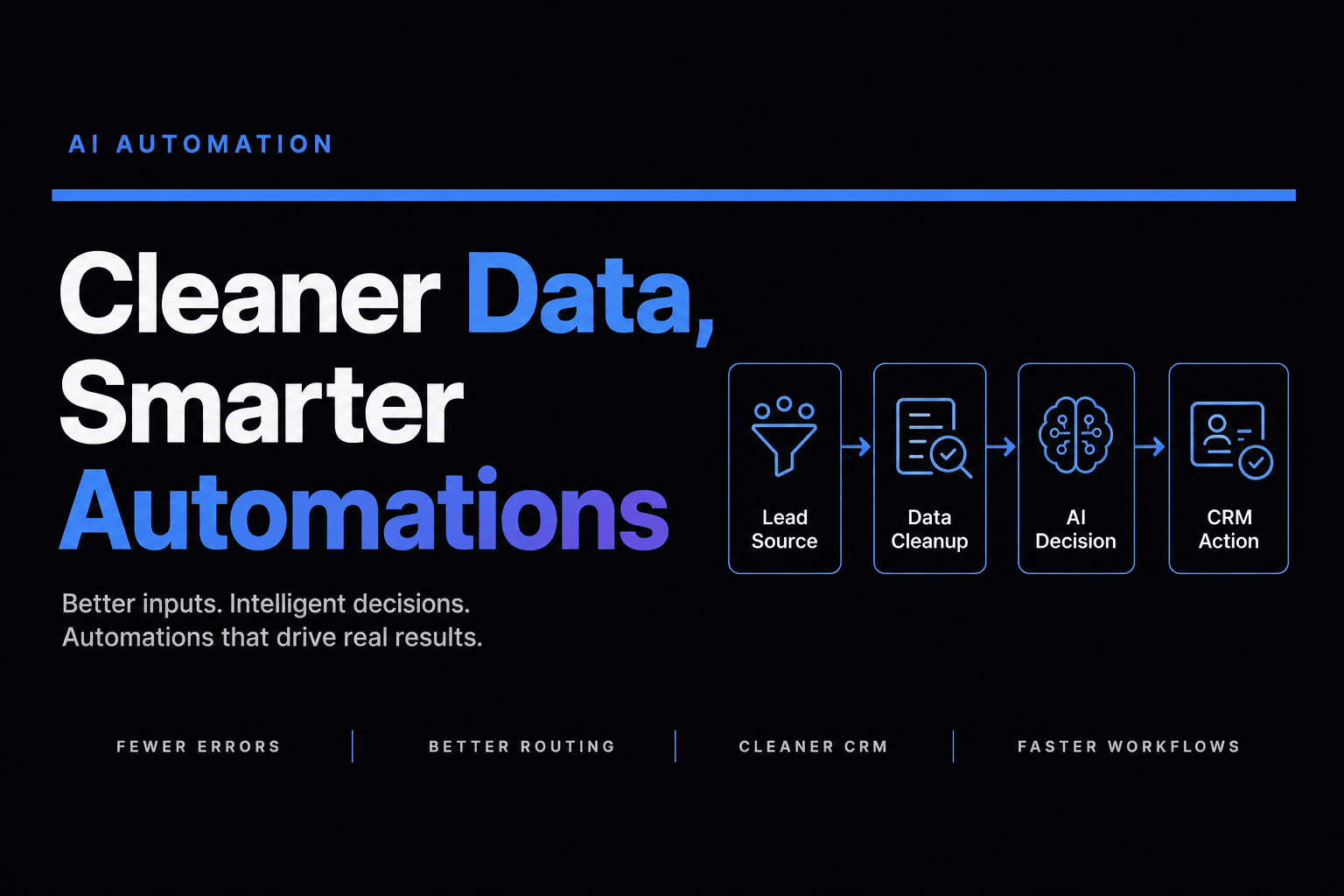
Inbound message or call
→ AI extracts intent and entities
→ structured fields get updated
→ routing rules evaluate those fields
→ next action fires in CRM or calendar
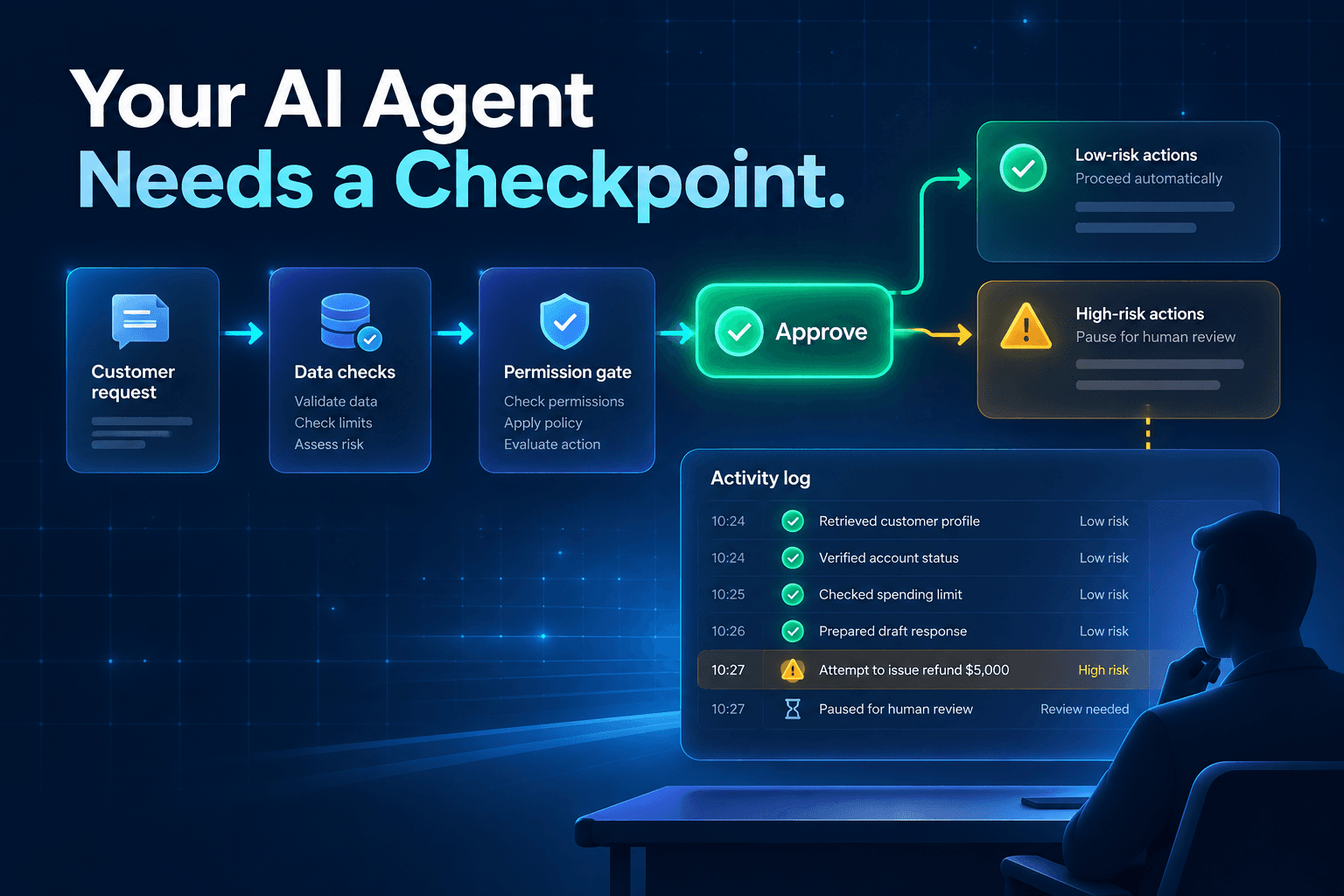
→ human review happens only where risk is high
That design is boring in the best possible way. It makes outputs repeatable.
For example, in a lead workflow, we usually want the system to answer five operational questions before anything fancy happens:
- Is this a real lead?
- What service or product are they asking about?
- How urgent is it?
- Who should own it?
- What happens next?
If the answer to those questions only lives inside a paragraph summary, your reporting, handoffs, and follow-ups will drift. If the answers become structured fields, your Multi-agent Systems can coordinate around them.
That’s one reason we push teams toward defined schemas early, especially when building cross-tool automations. The same lead record might need to trigger calendar logic, CRM tasks, outbound messaging, and qualification rules. A clean structure is what keeps all of those systems speaking the same language. It’s also why the complete guide to multi-agent AI systems for small business operations focuses so heavily on handoffs and role clarity, not just model behavior.
And if your CRM already looks like a garage drawer full of half-dead batteries, 7 ways to use AI agents to clean up CRM data automatically is a practical next step.
Start with one schema, not a giant data makeover
This is the part people overcomplicate. You do not need a grand enterprise data initiative before building useful AI automations. You need one workflow with clear fields, clear states, and clear actions.
Start small. But start structured.
A good first schema might include:
- contact name
- company name
- phone
- lead source
- inquiry type
- urgency
- owner
- status
- next action date
That alone can clean up a surprising amount of operational mess.
Then add a few rules:
Required before routing
- valid phone or email
- selected service line
- geographic fit
- urgency tier
Required before sales handoff
- qualification status
- budget or fit marker
- conversation summary
- booked meeting or next-step task
This is how Lead qualification becomes scalable. Not because the model got more creative, but because the system got more explicit.
The same Dun & Bradstreet AI survey from February 2025 found that 88% of organizations were implementing AI, while 54% had concerns about the trustworthiness and quality of the data they were using. That should tell you where the real build priority is. Adoption is not the hard part now. Reliability is.
If you can define the fields that matter, standardize them, and keep them updated automatically, your AI automations get better fast:
- fewer manual corrections
- cleaner routing
- better reporting
- more consistent follow-up
- easier governance as volume grows
That is not a side benefit. That is the product.
Structured data is what turns AI from helpful into dependable
The dirty secret of a lot of AI projects is that the demo worked because a human quietly supplied all the missing context.
Production does not work like that.
Real automations need to survive messy forms, odd customer phrasing, changing ownership, duplicate records, and systems that were never designed to play nicely together. Structured data is what gives AI enough footing to operate without constant babysitting. It is the layer that turns summaries into actions, conversations into workflows, and intent into something your systems can actually use.
If your current automations feel clever but inconsistent, that’s usually the clue. The model may be fine. The structure underneath it probably isn’t.
If you want help designing AI Agents, Voice AI, or Workflow Automation systems that capture cleaner data, qualify leads faster, and keep your CRM in sync, AI-Automated builds practical automations for exactly that kind of work. Let’s build one workflow that stops guessing and starts moving.