9 Tools to Automate Lead Qualification
Most teams do not need more SDRs to qualify more leads. They need fewer delays, cleaner routing, and better context before a rep ever opens the record.
That sounds obvious, but in practice, lead qualification breaks down in boring places: a form goes unanswered for three hours, enrichment pulls in junk fields, scoring rules drift out of date, or reps waste time reviewing leads that were never a fit. Meanwhile, the economics are getting harder to ignore. The median B2B lead response time is still 42 hours, and companies that reply within 5 minutes see much stronger qualification and conversion outcomes in recent benchmark data from Artemis GTM’s 2026 Speed to Lead study. At the same time, sales teams using AI agents are pushing work upstream: 92% of sales pros with AI agents say AI benefits prospecting, according to the Salesforce State of Sales, 7th Edition.
The opportunity is not to replace reps. It is to stop spending human time on research, routing, scoring, and repetitive first-pass follow-up. Here are 9 tools for automating lead qualification without adding SDR headcount, and what each one is actually good at.
1. Use instant response automation first, not fancy scoring first
If a new lead waits half a day for a reply, your scoring model is not the main problem.
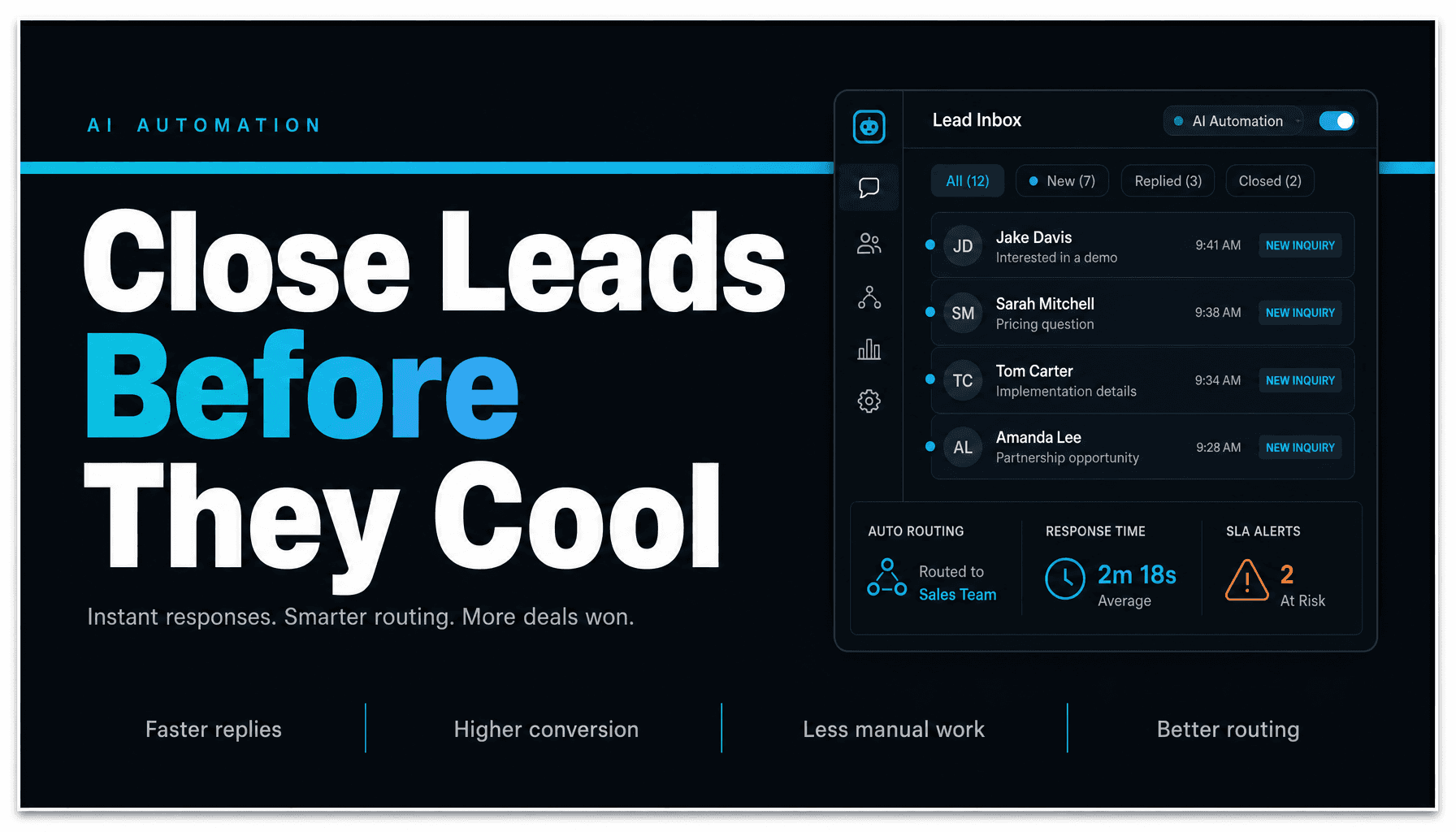
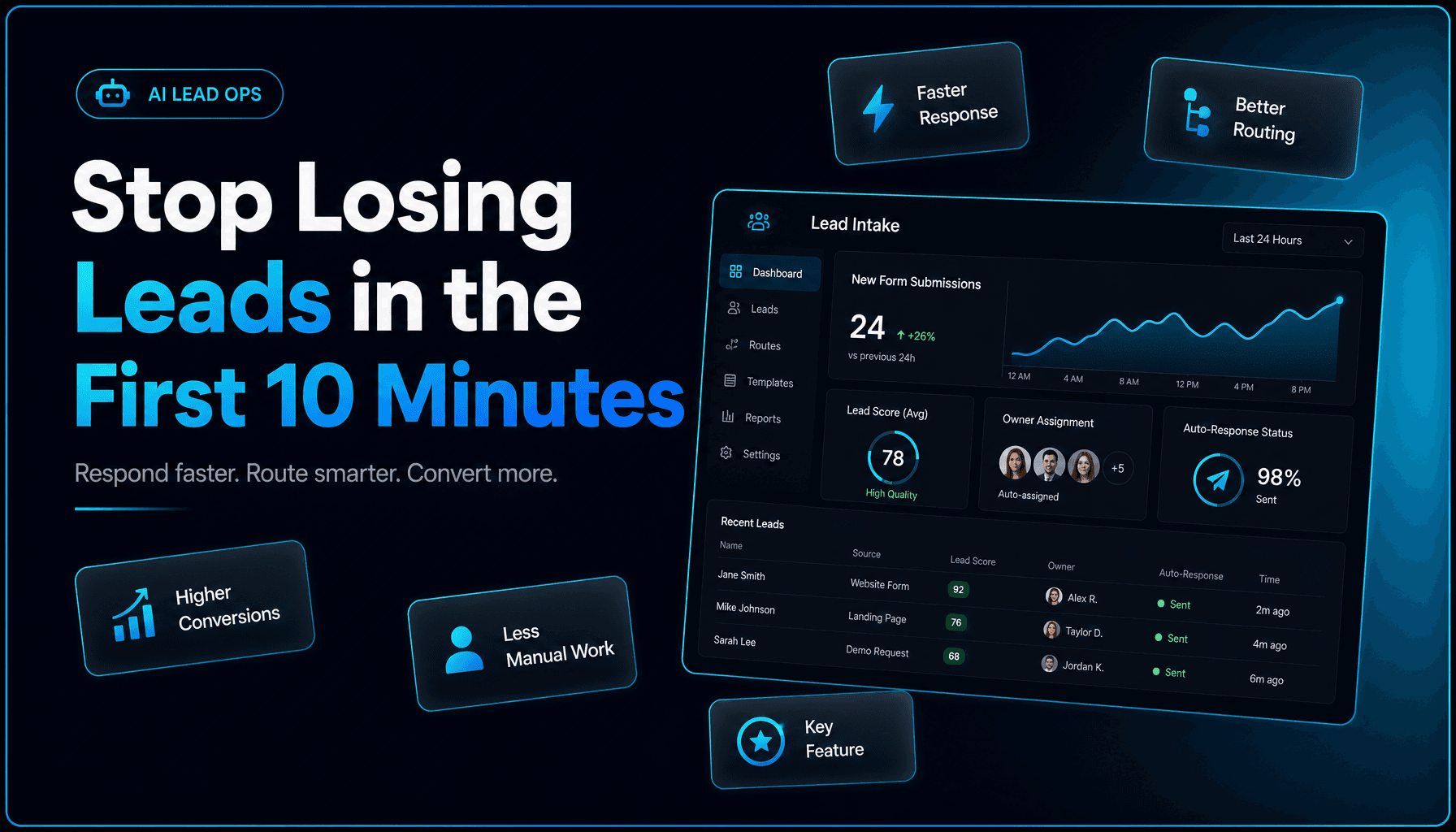
We’ve found the first qualification tool most teams need is instant response automation tied to forms, chat, and inbound messages. This can be as simple as an AI workflow that acknowledges the inquiry, asks 2 to 4 routing questions, creates the CRM record, and assigns ownership before a rep logs in. That sounds basic, but it fixes the highest-friction moment in the funnel.
Recent benchmark data from Artemis GTM’s 2026 Speed to Lead study found that companies responding within 5 minutes achieved 21% lead-to-opportunity conversion, versus 2.3% for companies responding after 24 hours. The same study says only 7% of B2B companies currently meet that benchmark.
For a small agency or real estate team, this usually means one thing: stop letting leads sit in an inbox waiting for a human triage pass. An AI agent can capture source, service interest, budget range, and timeline immediately, then push the record into your CRM with a recommended next step.
If lead response is still manual, start there before you buy anything more complex.
2. Don’t send every lead to sales right away
This is where teams burn headcount without realizing it.
A lot of businesses treat qualification like a race. The moment a lead arrives, it gets routed to a rep, even if the lead is missing budget, use case, geography, or buyer-role fit. Then the SDR becomes a human filter. That is expensive.
A better tool is a pre-SDR qualification layer: a form logic engine, conversational AI intake flow, or Voice AI front door that decides whether the lead should go to sales, nurture, self-serve booking, or manual review.
This is also where the contrarian point matters. A joint analysis of 10M+ leads cited by ProPair’s 2025 lead quality study found that replying in under 5 minutes improved conversion 2 to 3x, but only when the lead was high-fit. Chasing low-quality leads faster had no measurable impact on close rates.
So yes, speed matters. But speed without filtering just helps you waste time faster.
This is why we often recommend a qualification workflow that asks a few hard questions up front: company size, location, urgency, budget band, service type, or whether they are the decision-maker. If the answer set is weak, route the lead somewhere other than a rep calendar.
3. Enrichment tools are only useful if they write structured CRM fields
A tool that appends company data but dumps it into a note is not really helping operations.
The best enrichment tools do three things well: pull the right company and contact data, normalize it into fixed fields, and trigger the next workflow automatically. That means your CRM should end up with values like industry, employee_range, estimated_revenue, use_case, fit_score, and next_action, not a paragraph nobody will read again.
This matters more than most teams think. In the Salesforce State of Sales, 7th Edition, 46% of sales pros with agents said data quality issues hurt their sales, and top data issues included manual errors, duplicate data, and incomplete data.
In practice, the tool category here might be a data provider, an AI research agent, or a CRM-native enrichment workflow. The real test is simple: after the enrichment runs, can you route, report, and prioritize without a human reading freeform text?
If the answer is no, the tool is adding noise.
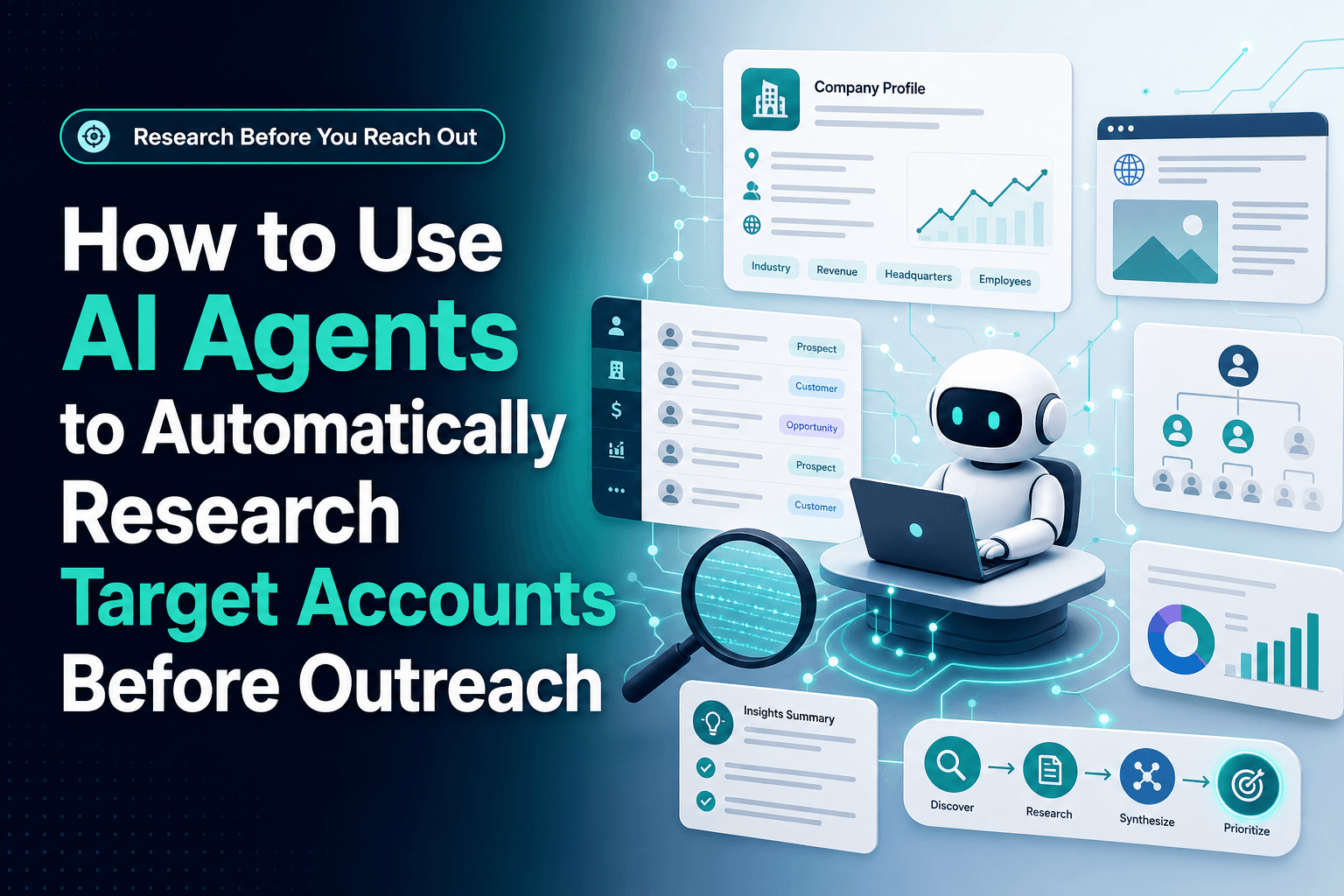
If you want the broader workflow behind this, our guide on how to automatically research leads using AI agents shows how to turn enrichment into a usable qualification system.
4. AI form analyzers can qualify leads before they ever hit the pipeline
One of the highest-ROI tools in this stack is not flashy at all: an AI layer on top of your inbound forms.
Instead of treating every form fill as a sales-ready lead, a form analyzer reads the submission, extracts buying signals, scores intent, flags disqualifiers, and decides what happens next. This is especially useful when prospects type messy details into an open text box like “Need help for 3 locations, want this live next month, currently on HubSpot.”
A good analyzer can turn that into something your team can act on:
Intent: high
Use case: multi-location workflow automation
Urgency: 30 days
Current stack: HubSpot
Recommended route: AE review within 1 hour
For lean teams, this is how you avoid making reps read every inquiry manually. It is also a clean fit with automated lead generation for small business, where the real challenge is not capturing leads, but separating “interested” from “ready.”
What actually works is keeping the schema tight. If your analyzer returns ten speculative fields and five weak guesses, reps will ignore it. If it returns three reliable fields and one confidence score, they will use it.
5. Voice AI is the right tool when your best leads still call
A lot of lead qualification stacks are built as if every buyer fills out a form. They do not.
For service businesses, brokerages, real estate teams, and local operators, the highest-intent lead often still comes in by phone. If that call hits voicemail or gets answered by someone who can only take a message, you are creating SDR work that did not need to exist.
That is where Voice AI becomes a qualification tool, not just a call-answering tool. It can answer after hours, ask routing questions, capture service type, budget or timeline, and either book directly or push the lead into a rep queue with context attached.
We’ve seen this work especially well when the old process involved handwritten notes, call recordings nobody reviewed, or “Can you call them back tomorrow?” handoffs. Voice AI creates structure at the moment of intent.
For readers looking at customer-facing automation more broadly, how to automate customer inquiries covers the routing side, while our separate piece on Voice AI goes deeper on phone workflows.
If your team is missing leads by phone, adding SDRs is often the wrong fix. Better call intake is the fix.
6. Predictive scoring tools only work when you feed them closed-loop outcomes
This is the mistake section.
Most teams overestimate what lead scoring software can do on day one. They turn on a predictive model, accept the default weights, and assume the score is now truth. Then reps quietly work around it because the rankings feel wrong.
The useful version of predictive scoring is trained on your actual outcomes: booked meetings, qualified opportunities, no-shows, deal stage progression, closed-won, and closed-lost reasons. Without that loop, the score is just math on surface-level traits.
Here is the simple version:
Weak scoring setupBetter scoring setupUses only firmographicsUses firmographics plus downstream outcomesNo confidence labelIncludes confidence or review thresholdStatic rulesRecalibrated monthly or quarterlySent straight to repsUsed for routing, prioritization, and exceptions
This is also where teams should read 10 common mistakes small businesses make when integrating AI. Qualification automation fails when the process is vague and the model is expected to invent clarity.
A score should support judgment, not replace it.
7. Conversation intelligence tools can qualify based on what buyers actually say
Sometimes the best qualification data is not in the form, the firmographic profile, or the source field. It is in the first conversation.
That makes conversation intelligence one of the most underrated qualification tools. When calls, demos, or chat transcripts are analyzed automatically, you can extract concrete buying signals like implementation timeline, current tool stack, number of users, integration needs, pricing sensitivity, or objections. That information can update the CRM without requiring the rep to type it all back in.
This matters because reps still lose too much time to note cleanup and follow-up admin. In the Salesforce State of Sales, 7th Edition, sales teams reported that AI agents improve prospecting and free reps for higher-value work, with 85% of reps with agents saying AI frees them to focus on higher-value tasks.
A practical example: if a prospect says, “We need this live in two weeks for four reps and we already use Salesforce,” your workflow should update urgency, team size, and CRM fit automatically, then trigger the right follow-up sequence.
That is better than hoping the rep remembers to do admin after the call.
8. Routing tools should optimize for capacity, not just territory
A lead can be qualified and still get mishandled.
One of the biggest hidden problems in qualification is bad routing logic. Teams send leads by geography or account owner, even when that person is overloaded, out of office, or slow to follow up. The result is a qualified lead sitting untouched while the business tells itself the top-of-funnel is fine.
A better tool is a capacity-aware routing engine. It routes based on fit, urgency, channel, rep availability, and SLA risk. In practice, that often means:
- high-intent inbound goes to the fastest available qualified rep
- lower-fit leads enter nurture automatically
- uncertain leads get flagged for review
- existing-account leads bypass SDR triage entirely
This is where CRM Automation matters more than one more dashboard. Routing should happen based on rules, not memory.
And if qualification is already in place, the next logical layer is how to automate lead follow-up, because a perfectly scored lead is still useless if nobody acts on it.
The best routing tools do not just answer “Who owns this?” They answer “Who should act on this right now?”
9. Multi-agent qualification stacks are worth it only when the handoffs are clear
Not every business needs Multi-agent Systems for lead qualification. But when volume is high or workflows cross multiple tools, they can be the cleanest setup.
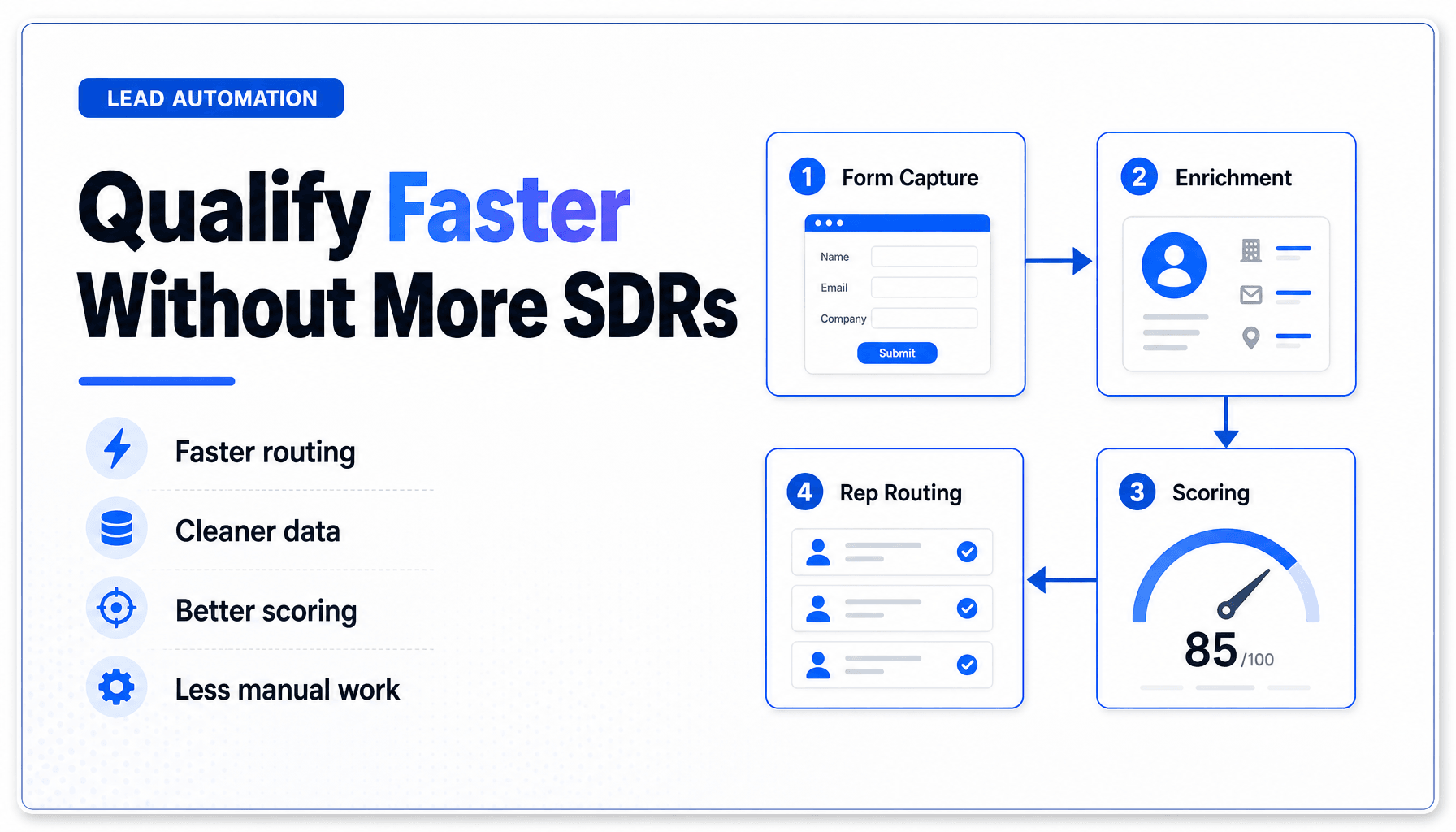
We usually think about this as specialized roles:
- one agent captures and validates inbound data
- one agent enriches company and contact records
- one agent scores fit and urgency
- one agent routes or triggers the next workflow
That sounds more complex than it needs to be. In practice, it is just a way to keep each step narrow and auditable. This becomes even more useful when you are connecting your CRM, enrichment source, calendar, help desk, and communication tools through standards like Model Context Protocol or more custom agent workflows.
The broader market is moving this direction. In the Salesforce State of Sales, 7th Edition, 94% of sales leaders with agents said they are critical for meeting business demands. That does not mean every company needs a complex build. It means teams are increasingly using AI Agents to handle pieces of sales execution that used to require more headcount.
The key is clear handoffs. If each agent writes structured output and the next step is deterministic, the system works. If agents pass vague summaries back and forth, it turns into expensive confusion.
The Bottom Line
The best lead qualification tool is rarely the one with the longest feature list. It is the one that removes the most repetitive human work while making your routing, scoring, and CRM data more reliable.
For most teams, that means starting with fast response, structured enrichment, and rule-based routing. Then add predictive scoring, conversation intelligence, or Voice AI where they solve a real bottleneck. Keep the outputs structured. Keep the handoffs clear. And keep humans focused on actual selling.
If you want help designing AI Automation for lead qualification, follow-up, or CRM routing, AI-Automated builds practical systems that qualify leads faster, reduce admin, and help teams scale without adding SDR headcount.