Why Voice AI Is the Missing Front Desk for Small Businesses
What happens when your best lead calls at 6:07 p.m., your team leaves at 6, and the only thing answering the phone is voicemail? Usually, nothing good.
For a lot of small businesses, the front desk is not a person. It is a patchwork of missed calls, overflow inboxes, sticky notes, and someone saying, “I’ll call them back after lunch,” then absolutely not doing that. That gap is expensive. According to Verint’s State of Customer Experience 2026, 78% of customers prioritize the fastest resolution over their preferred channel, and 69% would switch to automation if it fully resolved the issue. In other words, people are not demanding a human first. They are demanding an answer first.
That is why Voice AI is becoming the missing front desk for small businesses. Not because it sounds futuristic. Because it covers the exact moments where teams leak revenue: after-hours calls, repetitive intake, bad routing, slow follow-up, and zero context when a human finally jumps in. When built well, it becomes a practical layer of AI Automation that captures intent, handles simple requests, and moves the right calls into the right workflow without making callers suffer through a phone tree from 2009.
Missed calls are not a phone problem, they are a pipeline problem
Small businesses tend to treat inbound calls like a staffing issue. In practice, they are usually a revenue operations issue wearing a headset.
When a call goes unanswered, the damage is not limited to one missed conversation. You also lose the lead source, the qualification moment, the urgency signal, and the chance to route the inquiry while intent is still hot. That matters because phone calls often come from people further down the decision path than casual website visitors.
A 2025 RingCentral AI Receptionist brief notes that about 1 in 5 missed calls is a potential customer trying to book an appointment, convert, or get an urgent issue handled, and 85% of missed callers will not attempt to reach you again. That is brutal math for any business that depends on appointments, estimates, consultations, or inbound service demand.
We have found this is especially painful in businesses like:
- home services teams fielding urgent requests
- dental and medical offices managing schedule changes
- law firms and brokerages screening new inquiries
- real estate teams trying to catch high-intent prospects fast
If your call handling still depends on “whoever is free,” you do not really have a front desk. You have a hope-based routing system.
This is the same reason fast intake matters in digital channels too. If you are already thinking about routing and response speed, our guide on why speed to lead still wins in 2026 and how AI helps you get there breaks down how delayed responses quietly kill conversion long before anyone notices the pattern.
Customers do not hate automation, they hate broken automation
A lot of owners still assume callers want a human no matter what. That is only half true.
Yes, some people prefer a person, especially when the issue is emotional, complex, or high stakes. But the data is more useful than the cliché. According to Verint’s 2026 CX survey, 61% of consumers currently prefer speaking to a human, but 69% would switch to automated service if it could fully resolve the issue. Customers are not anti-automation. They are anti-dead-end.
That distinction matters because bad phone automation usually fails in three predictable ways:
- It forces callers through rigid menu paths.
- It collects information, then makes them repeat it to a human.
- It cannot actually complete the next step.
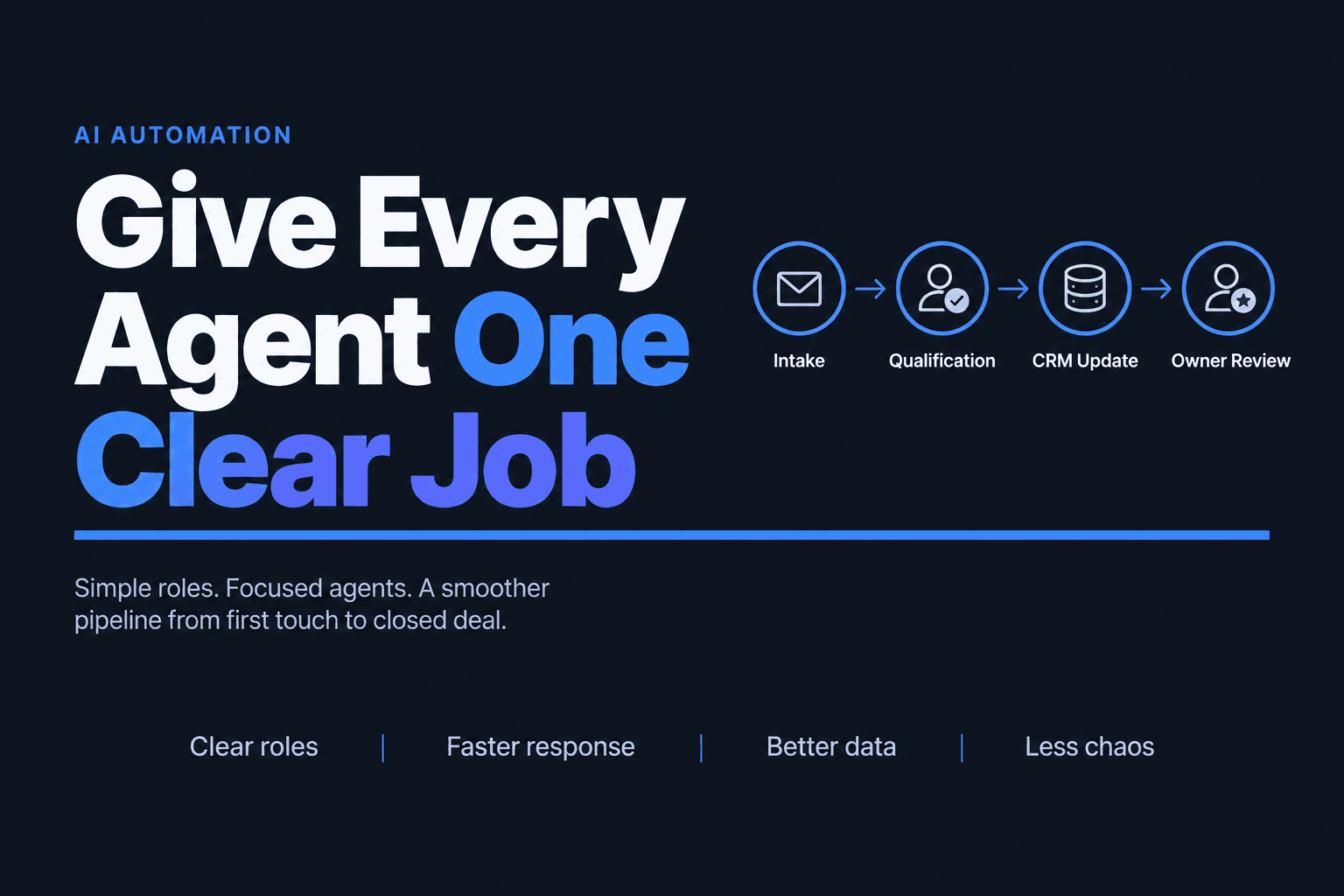
The best Voice AI systems avoid all three. Instead of acting like a glorified IVR, they work like an operational front desk:
- identify caller intent in natural language
- answer common questions
- collect missing details
- trigger booking, routing, or follow-up workflows
- hand off with context when confidence is low
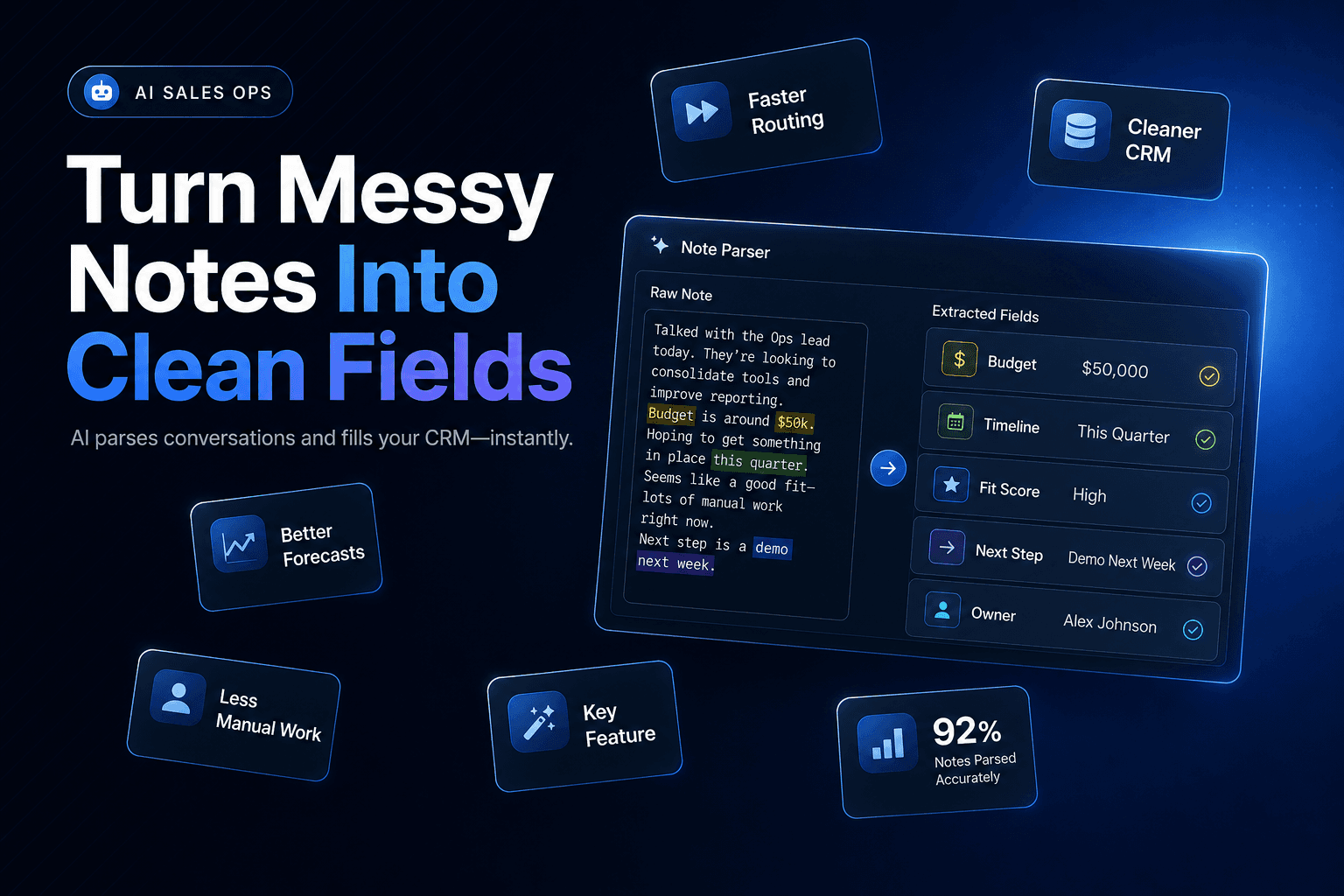
That last part is the difference between a toy and a useful system. If the AI can gather the reason for the call, summarize urgency, check business rules, and pass notes into your CRM or ticketing system, the human who takes over starts ahead instead of from zero.
If you are still deciding where chatbots end and agents begin, AI Agents vs Chatbots: Key Differences, Use Cases, and the Future of Intelligent Automation is worth a read before you buy anything that promises magic and mostly delivers hold music.
The real job of Voice AI is triage, not theater
This is the mildly contrarian part: a realistic Voice AI deployment should not try to sound like your friendliest employee. It should try to move the call forward correctly.
Too many teams obsess over whether the voice sounds natural enough, then ignore whether the workflow behind it is useful. Callers will forgive a slightly robotic tone faster than they will forgive being transferred three times and still not getting help.
In practice, the most valuable front-desk tasks are boring, structured, and perfect for Workflow Automation:
What Voice AI should usually handle on its own
- hours, location, and service-area questions
- appointment booking or rescheduling
- basic qualification for new leads
- routing billing vs support vs sales inquiries
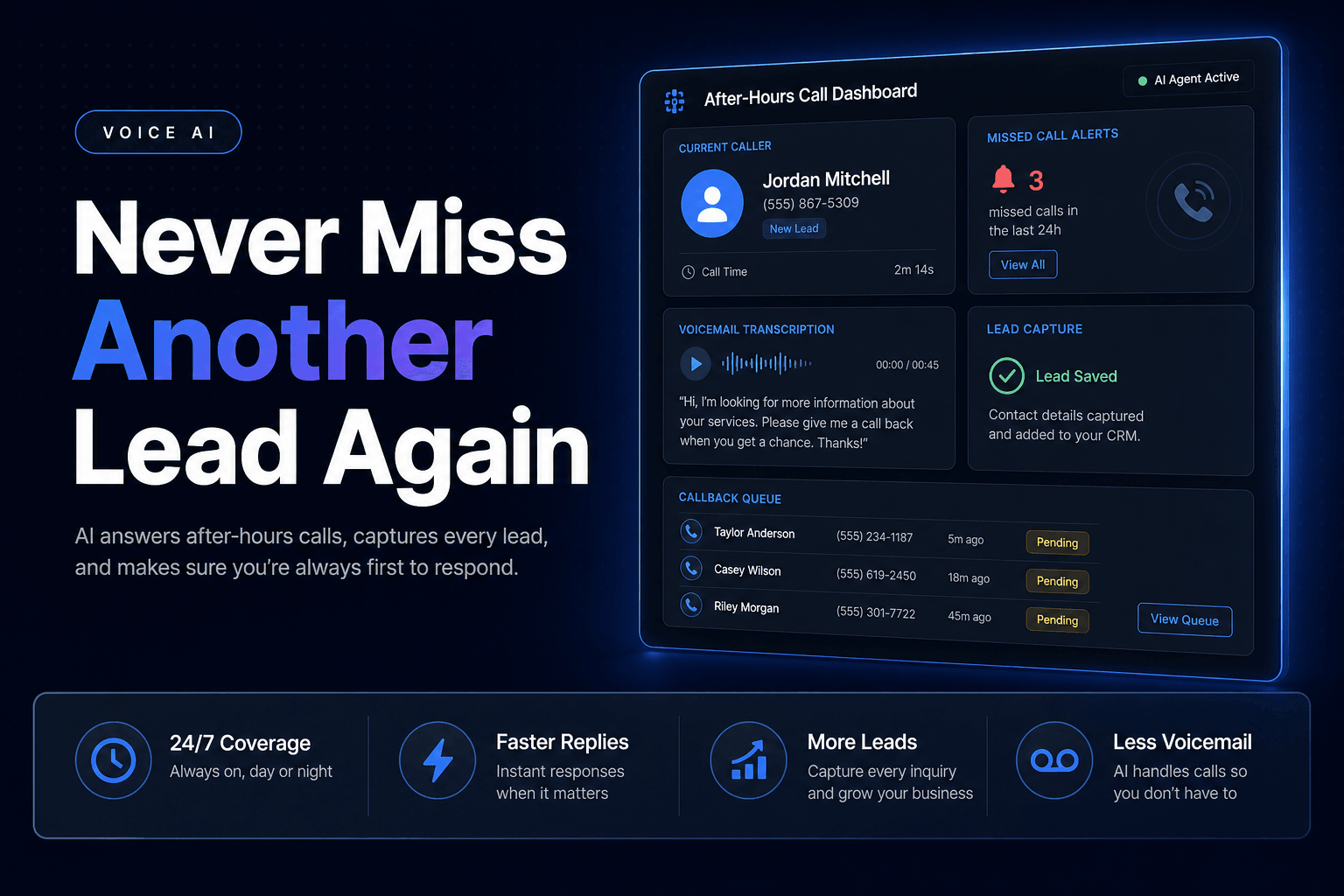
- after-hours message capture with structured follow-up
What Voice AI should usually hand off
- emotionally charged complaints
- exceptions to policy
- high-value sales conversations
- regulated or sensitive account issues
- anything with low confidence or unclear intent
This is why we treat voice as the first layer of action, not the final destination. A strong system does not just answer the phone. It decides what should happen next.
For service businesses, that often means connecting call intake to calendars, forms, reminders, and CRM Automation. If that is your bottleneck, The Complete Guide to Appointment Booking Automation for Service Businesses and How to Build an AI Intake System for Service Businesses both map the workflow side that usually matters more than the voice layer itself.
If the AI does not know your business rules, it is just a nicer voicemail
This is where most small business deployments go sideways.
The voice layer sounds decent in the demo, but nobody gave it the real operating context. It does not know which ZIP codes you serve, which appointment types require manual approval, which prospects count as qualified, or which calls should skip the queue and go straight to a person. So it answers politely and routes badly.
That is not a voice problem. It is a systems problem.
According to Zendesk’s 2026 CX Trends reporting, 70% of customers expect agents to be fully briefed on their issue, but only half of support leaders say their teams are equipped to meet that expectation. When businesses separate voice from the rest of their customer data, callers pay the price by repeating themselves.
We have found reliable AI Automation for calls usually needs four ingredients:
-
Structured data
Your services, locations, hours, escalation rules, FAQs, and routing logic need to exist in a clean format. -
System access
The AI needs approved ways to read or write to calendars, CRMs, help desks, or lead queues. -
Decision rules
Not every caller should get the same path. Urgent service call, new sales lead, and billing question should not land in one bucket. -
Human fallback
A confident handoff is better than a fake answer.
This is also why bad data quietly wrecks otherwise solid automations. If your routing rules are fuzzy or your CRM is chaos, the voice layer inherits the mess. Why Structured Data Is the Secret Ingredient in Better AI Automations covers this in more detail, and yes, it is less glamorous than talking about models. It is also where a lot of ROI lives.
The payoff is not fewer calls, it is better handled calls
Small business owners sometimes ask the wrong question: “Can Voice AI reduce calls?”
Maybe. But that is not the best use case.
The better question is whether it can help you capture more value from the calls you are already getting. In our experience, the answer is yes, when the workflow is built around resolution and routing instead of novelty.
Recent adoption data backs that up. Salesforce’s State of Service: AI Agents Edition found that 66% of customer service organizations now use agentic AI, up from 39% in 2025, and 70% report measurable value within 60 days. More interestingly, the top KPI improvement reported after deployment was customer satisfaction, ahead of handle time and productivity.
That tracks with what actually happens on the ground. A well-built voice front desk can:
- capture leads after hours instead of sending them to voicemail
- route callers correctly on the first try
- reduce front-office interruptions for repetitive questions
- log cleaner intake notes into the CRM
- speed up handoffs so humans spend time on judgment, not repetition
For revenue-facing teams, the downstream effect is even bigger when voice ties into lead qualification and routing. If every caller gets captured, categorized, and pushed to the right person with context attached, the phone stops being a manual interruption and starts acting like an intelligent intake channel. That is exactly the logic behind How to Design a Lead Routing System That Sends Every Prospect to the Right Person.
Do not replace your front desk, give it backup that never clocks out
The best way to think about Voice AI is not as a replacement for your staff. It is the backup layer your business should have had years ago.
A small business rarely loses money because nobody cares. It loses money because the team is busy, the phones ring at the wrong time, the intake process lives in five places, and callers hit dead air when they are ready to act. That is exactly where Voice AI, AI Agents, and practical Workflow Automation start pulling their weight. They answer first, collect context, route intelligently, and keep the workflow moving until a human is actually needed.
The catch is simple: this only works when voice is connected to real operations. Not just a script. Not just a pretty voice. A system that understands your business rules, updates your CRM, and knows when to escalate.
If your team is missing calls, juggling intake manually, or relying on voicemail as a business process, that is fixable. AI-Automated builds custom Voice AI and AI Automation systems that help small businesses capture more leads, qualify inquiries faster, and keep customer communication moving without adding headcount. If you want a front desk that does not disappear at 5 p.m., let’s build one that actually works.