Why Small Teams Need Multi-Agent Systems, Not Just One Smart Bot
A single AI assistant looks impressive right up until it has to research a lead, judge fit, book a meeting, update the CRM, draft a follow-up, and produce Friday’s pipeline report without mixing any of those jobs together.
That is where small teams hit the ceiling.
In Anthropic’s 2026 State of AI Agents report, 57% of organizations were already deploying agents for multi-stage workflows, and 80% said those investments were delivering measurable economic returns. The teams seeing real gains are not handing an all-purpose bot a vague instruction and hoping it behaves like a junior ops hire. They are assigning distinct jobs, clear handoffs, and specific systems each agent is allowed to touch.
That is the practical case for multi-agent systems. Not a robot org chart for its own sake. A better way to keep repetitive work moving when your team is too busy selling, serving clients, and putting out the occasional inbox fire.
One smart bot becomes a bottleneck before it becomes a teammate
A general-purpose assistant can handle a surprising amount of work. Ask it to summarize a call, draft an email, or brainstorm a campaign and it can be useful fast.
Trouble starts when the work has dependencies.
Picture a five-person home services company. A new lead arrives through a website form at 7:18 p.m. The business needs to know whether the customer is in its service area, whether the job is urgent, whether the requested service is profitable, who should own the lead, and what message should go out next.
A single agent can attempt all of that. It can also:
- pull the wrong service area from an outdated document
- treat “ASAP” as a routine request
- write a polished reply without creating the CRM record
- schedule an appointment before checking technician availability
- bury uncertainty inside a confident-sounding paragraph
That last one is expensive.
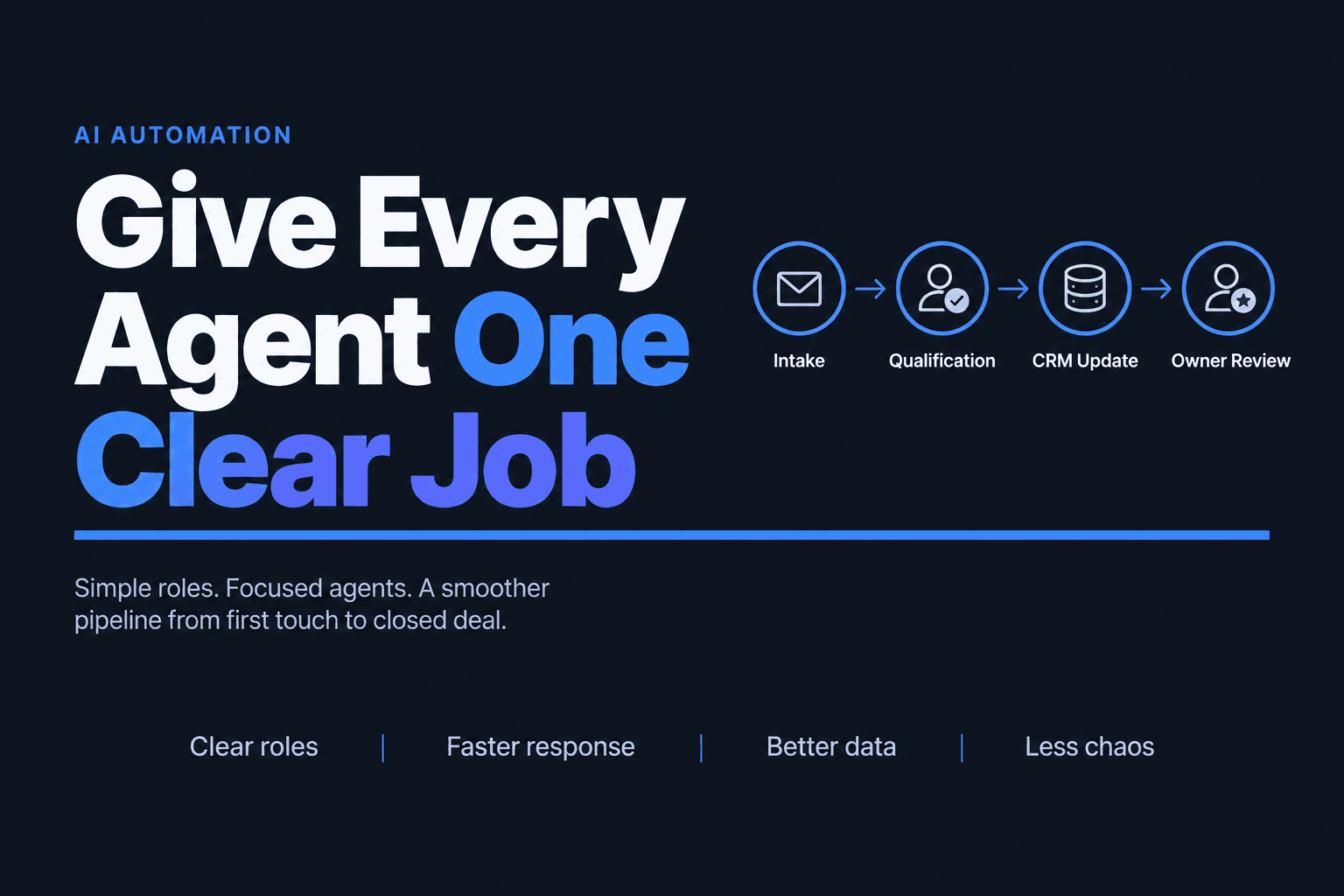
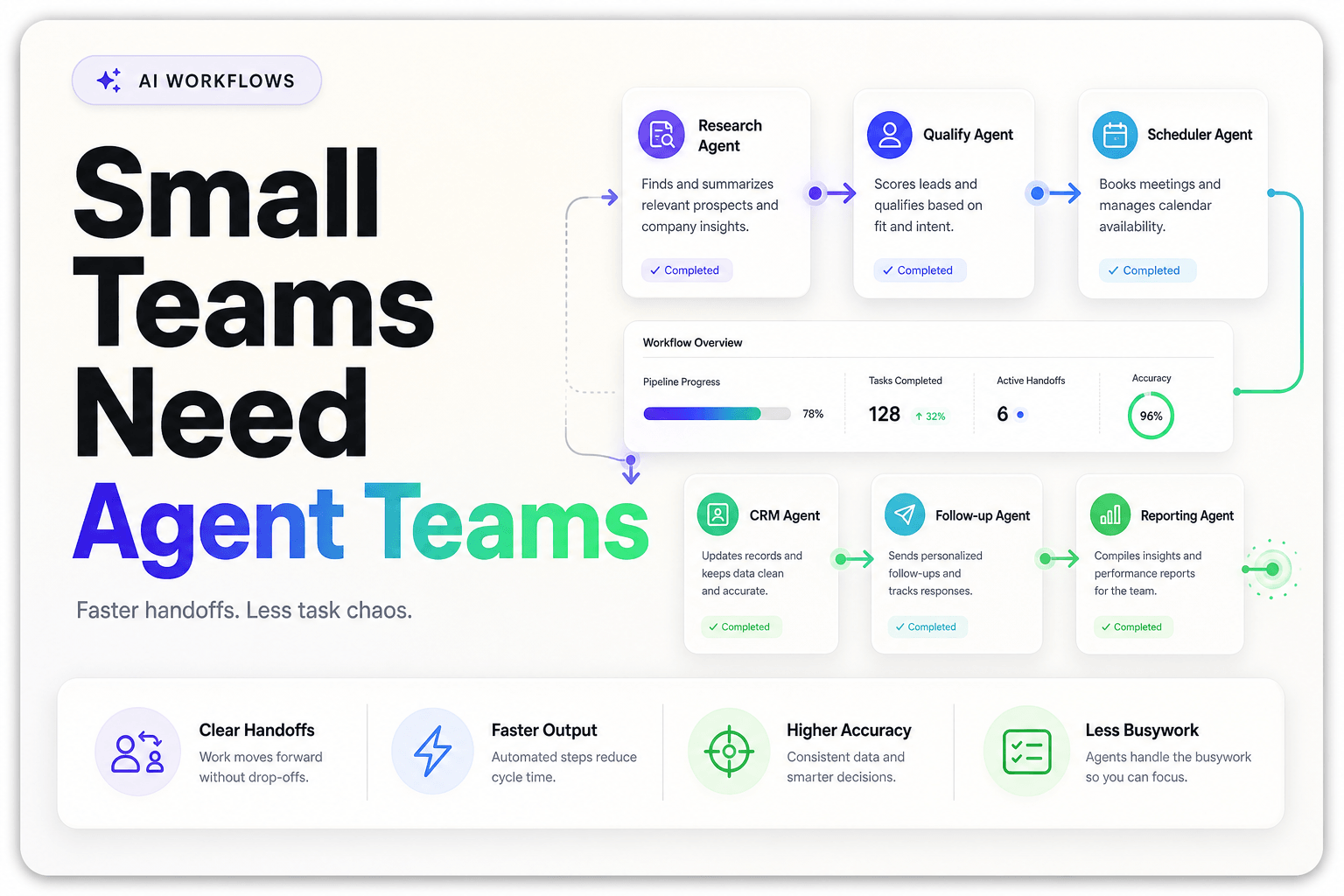
Multi-agent systems divide the job into pieces that can be checked. Instead of asking one bot to run the whole show, give each agent a narrow responsibility:
- An intake agent extracts contact details, service type, location, urgency, and lead source.
- A qualification agent checks rules such as service area, job type, budget signals, and duplicate records.
- A routing agent assigns the correct person or queue.
- A scheduling agent offers approved appointment slots.
- A follow-up agent sends the next message if the lead does not respond.
The difference is not merely technical. Each step has an owner, an input, an output, and a visible failure point. If scheduling goes wrong, you inspect scheduling. You do not retrace a 14-step conversation and hope the assistant remembers why it made a decision.
That structure is especially useful for teams building an AI lead qualification score their sales team will actually trust. A score is only useful when reps can see why it exists and what should happen next.
Give every handoff an artifact, not a vague chat summary
Most broken automations fail in the handoff.
Someone fills out a form. An agent researches the company. A rep receives a summary that says “high-potential prospect, likely interested in implementation help.” Fine. Then what?
Which service did they ask about? What page did they convert on? Did they mention a deadline? Has anyone already contacted them? Was the CRM updated? Is the research verified or inferred?
A multi-agent workflow works best when each stage produces a concrete artifact for the next stage. Think records, fields, statuses, approved notes, and decisions. Not a cloud of conversational memory.
For a lead workflow, the handoff might look like this:
New lead
  ↓
Intake agent creates CRM record
  ↓
Research agent adds verified company facts and source links
  ↓
Qualification agent writes score, reasons, and confidence level
  ↓
Routing agent assigns owner and response deadline
  ↓
Follow-up agent sends approved first response
  ↓
Human reviews exceptions
This is less glamorous than “an autonomous sales bot.” It is also far more useful on a Tuesday afternoon when two reps are out, three leads arrive at once, and the owner wants to know who replied.
We have found that teams should define the handoff fields before they choose the model or write the prompt. A research agent, for example, should not return a freeform essay. It should populate:
- company size range
- location
- services mentioned
- hiring or growth signals
- source URLs
- unknown or conflicting facts
- recommended next question
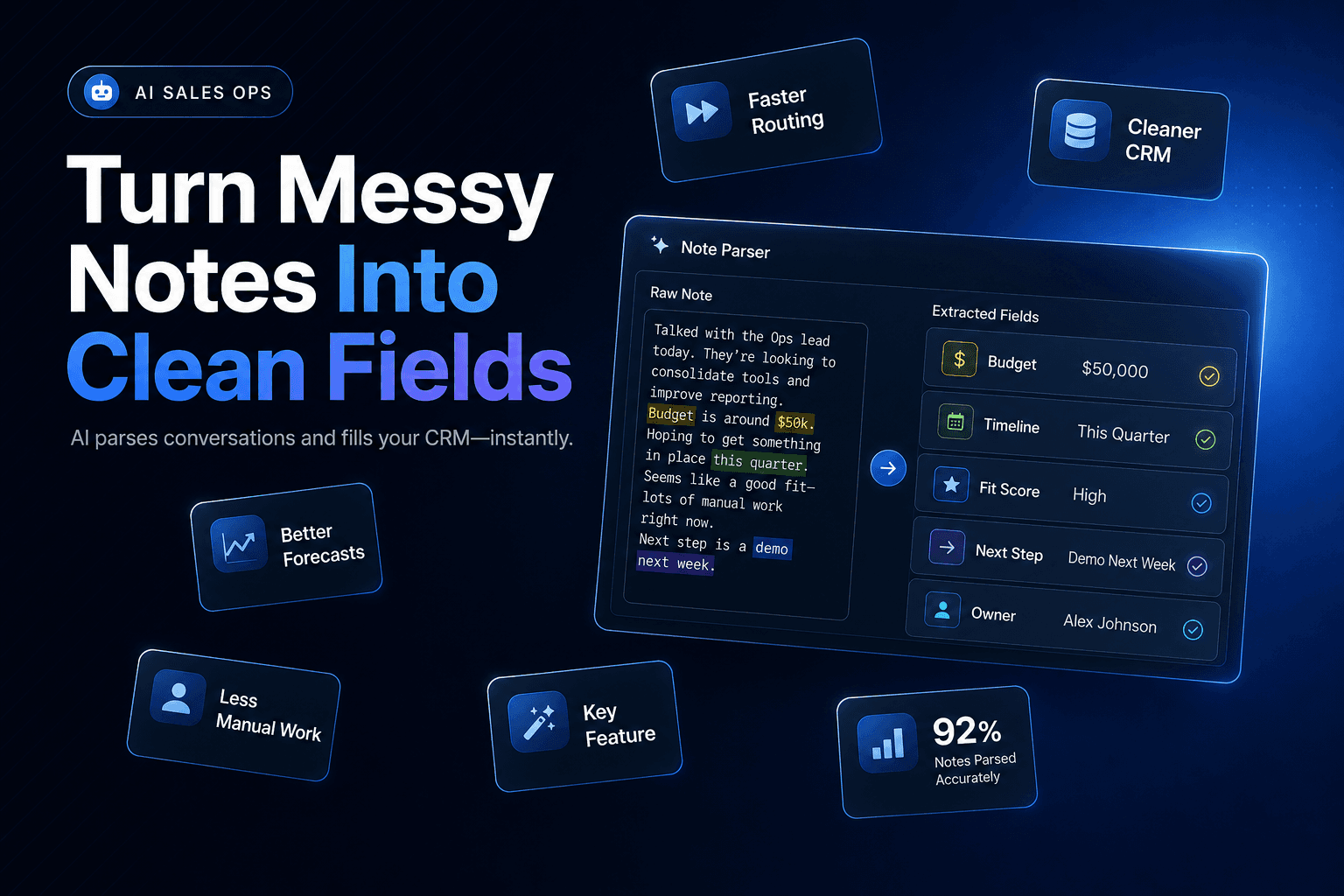
That makes the work usable by the qualification agent and easy for a human to audit. It also prevents a common failure where an agent turns uncertain web research into a confident sales claim. For workflows that depend on this kind of reliable context, structured data is the secret ingredient in better AI automations.
Don’t send every task through the same reasoning loop
Small teams often assume a smarter model is the answer. Sometimes it is. More often, the bottleneck is task switching.
Research, qualification, scheduling, reporting, and follow-up all require different information and different levels of judgment. A research agent needs web access and source rules. A scheduling agent needs calendar permissions and booking constraints. A reporting agent needs clean historical data. Letting one bot carry every instruction at once creates a messy prompt, a bigger permission surface, and more ways to make an embarrassing update.
Specialization fixes that.
Research needs curiosity. Qualification needs rules.
A research agent can look for firmographics, recent announcements, service fit, and public buying signals. It should flag weak evidence rather than invent certainty.
The qualification agent should be stricter. Its job is to apply your actual rules:
- Is this person inside our ideal customer profile?
- Is the request within our service area?
- Is the company large enough for this offer?
- Is there urgency, budget, or a specific pain point?
- Does the record need human review before outreach?
Those are different jobs. Combining them usually produces a research-heavy answer with a mushy recommendation.
Scheduling needs constraints, not creativity
Scheduling is another place where “smart” can be unhelpful. The agent does not need to improvise. It needs to follow availability rules, appointment lengths, service territories, buffers, cancellation policies, and escalation instructions.
For example, a clinic might allow a booking agent to confirm routine appointments but require human review for insurance questions, urgent symptoms, or same-day requests. A real estate team may let an agent offer tours within a defined territory but route luxury listings or conflicting buyer requests to a senior agent.
That is why AI agents for appointment booking and calendar automation work best when the calendar is treated as a governed system, not an open invitation for the bot to “figure it out.”
Reporting needs stable inputs
Reporting agents should not spend half their time hunting for numbers across Slack, spreadsheets, and memory. Give them a defined data source, a reporting period, calculation rules, and a format.
A good weekly ops report might answer four questions:
- How many leads entered the system?
- How fast did the team respond?
- Where did leads stall?
- Which source produced qualified opportunities?
Now the report is operational. It tells the team what to fix Monday morning.
Reliability rises when agents are allowed to finish
There is a strange instinct in AI projects to make every agent appear endlessly capable. It should chat, research, decide, act, apologize, retry, and somehow keep going forever.
We prefer a different rule: an agent should know when its job is complete.
That means the intake agent stops after creating a complete record or raising a missing-data flag. The research agent stops after meeting its source threshold. The routing agent stops after assigning an owner and logging the reason. It does not wander into writing a sales email just because it can.
Clear stopping points improve reliability for two reasons.
First, they make errors easier to isolate. If the lead was routed to the wrong rep, you inspect the routing rules and assignment data. You do not blame “the AI” as if it were a mysterious weather event.
Second, they make evaluation possible. In LangChain’s 2026 survey of more than 1,300 professionals, only 52.4% said their organizations run offline evaluations on test sets. That leaves a lot of teams discovering bad behavior only after it reaches customers or internal systems. Not ideal.
Each specialized agent should have a scorecard. Keep it blunt.
| Agent | Success measure | Example failure |
|---|---|---|
| Intake agent | Required fields captured | Phone number missing or malformed |
| Research agent | Facts supported by sources | Unsupported company claim |
| Qualification agent | Agreement with sales review | Good lead marked low priority |
| Scheduling agent | Correct booking and calendar update | Wrong duration or territory |
| Follow-up agent | Reply sent within SLA | Duplicate or off-brand message |
This does not require a giant data team. A small business can begin by reviewing 20 to 50 completed cases every week. Compare agent output with the final human decision. Track repeat errors. Fix the rules, source data, or tool permissions causing them.
The result is less dramatic than a slick demo. It is how systems get dependable.
More agents can create more chaos, so earn every handoff
Here is the mildly annoying truth: multi-agent systems are not automatically better.
A two-step workflow can become a six-agent circus if every task gets its own shiny label. Suddenly there is a “strategy agent,” an “insights agent,” an “experience agent,” and nobody can explain why a lead was assigned to Mike instead of Priya.
More agents mean more handoffs. More handoffs mean more chances for dropped context, duplicated actions, conflicting instructions, and permission mistakes.
McKinsey’s 2025 global survey found that 62% of respondents said their organizations were at least experimenting with AI agents, but only 23% said they were scaling an agentic AI system within a business function. That gap makes sense. Building a demo is easy. Building a workflow that handles exceptions, bad inputs, and ownership changes is the real work.
Before adding an agent, ask four questions:
- Does this step need a different data source or permission set?
- Does it require a different kind of reasoning than the prior step?
- Can we define a measurable output?
- Would a simple rule or integration handle it better?
If the answer is no, do not add another agent. Keep the workflow smaller.
A lean agency might only need three agents: one to collect client inputs, one to prepare a draft deliverable, and one to check missing information before a human approves it. A larger sales operation might need five or six because routing, compliance, enrichment, and follow-up genuinely have separate constraints.
The point is not agent count. The point is controlled flow. If you want a useful sanity check before expanding, review these mistakes to avoid when designing multi-agent workflows.
Small teams win when work keeps moving without more meetings
The best multi-agent systems feel almost boring from the outside.
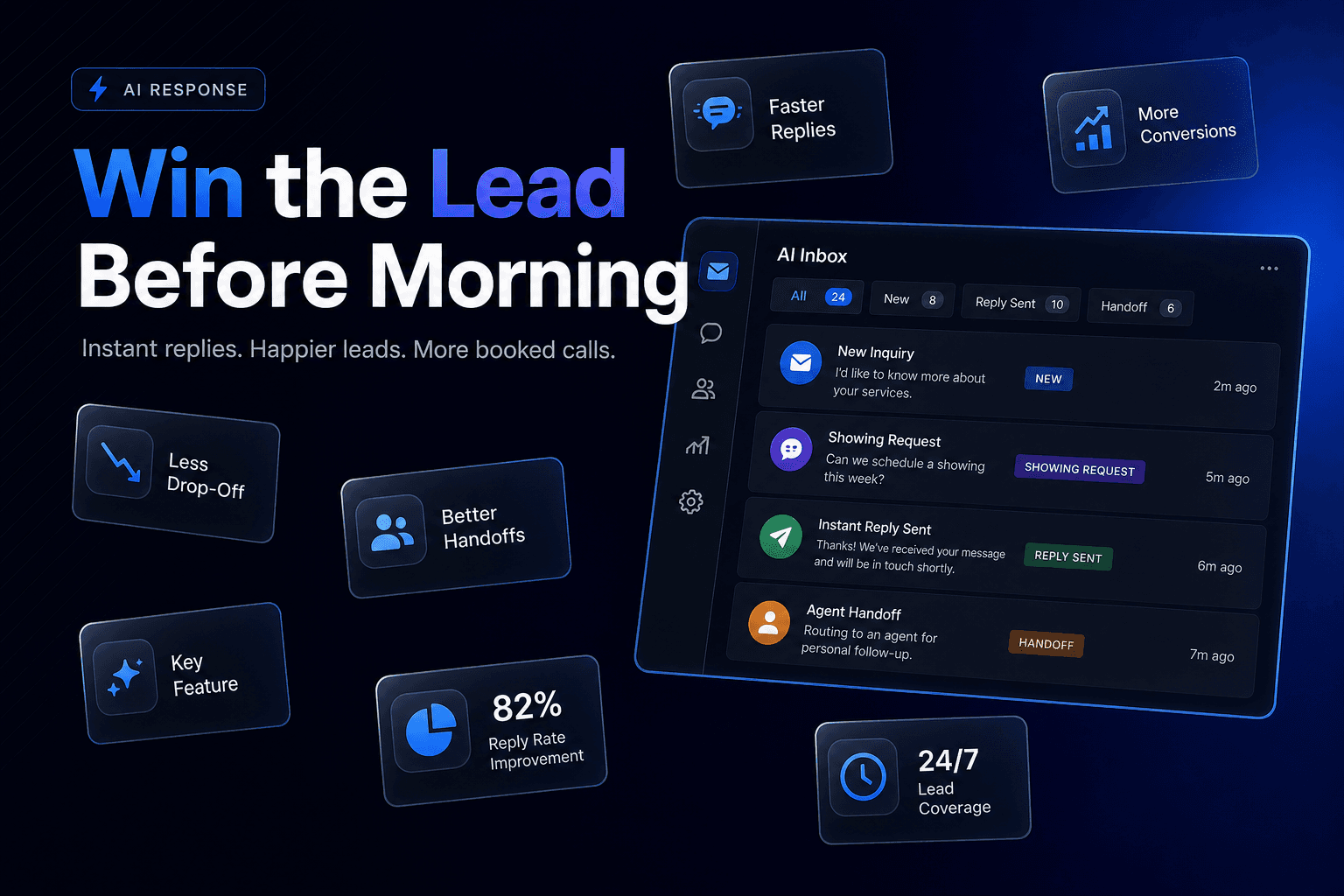
A lead gets a fast, relevant response. The CRM is updated. The right person receives context. A meeting lands on the calendar. The owner sees a clean report instead of chasing five people for numbers. Nobody has to ask, “Did anyone follow up with that inquiry?”
That is the win.
OpenAI’s 2025 enterprise report found that workers using ChatGPT Enterprise attributed 40 to 60 minutes saved per active day to AI use. For a lean team, the bigger opportunity is not collecting a few isolated minutes from everyone’s day. It is removing the gaps between tasks where leads cool off, records rot, and follow-ups disappear.
One smart bot can help a person work faster. A well-designed multi-agent system helps the business keep moving when people are busy.
AI-Automated builds practical AI Agents, CRM Automation, Voice AI, and Workflow Automation systems around the work your team already does. If research, qualification, scheduling, reporting, and follow-up are still living in separate tabs and someone’s memory, schedule a consultation with our team and let’s map the workflow that should run without constant supervision.