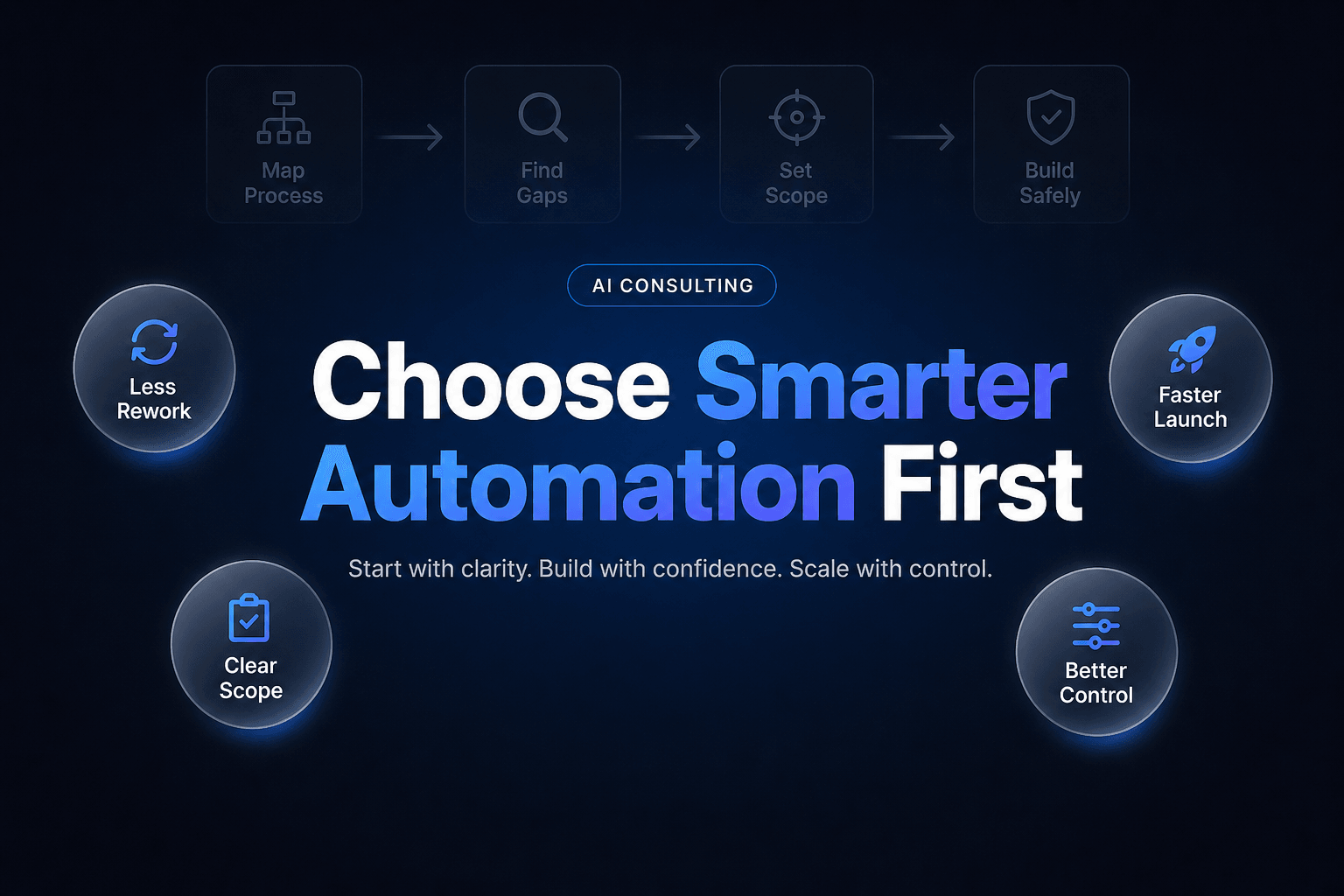
8 Ways AI Consulting Helps Teams Choose the Right Automation Before They Build It
Most AI projects start with a demo, a subscription, and somebody saying, “We should probably use AI for that.”
Then the project hits real life: duplicate CRM records, unclear approval rules, five different versions of the same intake form, and nobody able to explain who owns the result. Expensive rebuilds follow.
AI consulting earns its keep before any workflow gets built. It helps teams separate flashy ideas from useful systems, identify the operational gaps that will cause trouble later, and choose an automation scope that can actually ship. The aim is not another 40-page strategy document that gathers dust beside the printer. It is a practical plan for reducing repetitive work, improving lead qualification, speeding response times, and giving people clear control over what AI can and cannot do.
Here are eight ways a well-run AI consulting engagement turns scattered AI ambition into an automation plan worth building.
1. Map the work before picking the tool
A tool-first conversation usually sounds like this: “Can an AI Agent answer our leads?”
A consulting conversation gets more specific. Which leads? From which channels? What fields need to be captured? Who owns a lead after hours? What happens if a caller is outside the service area or asks for something your team does not offer?
That distinction saves weeks.
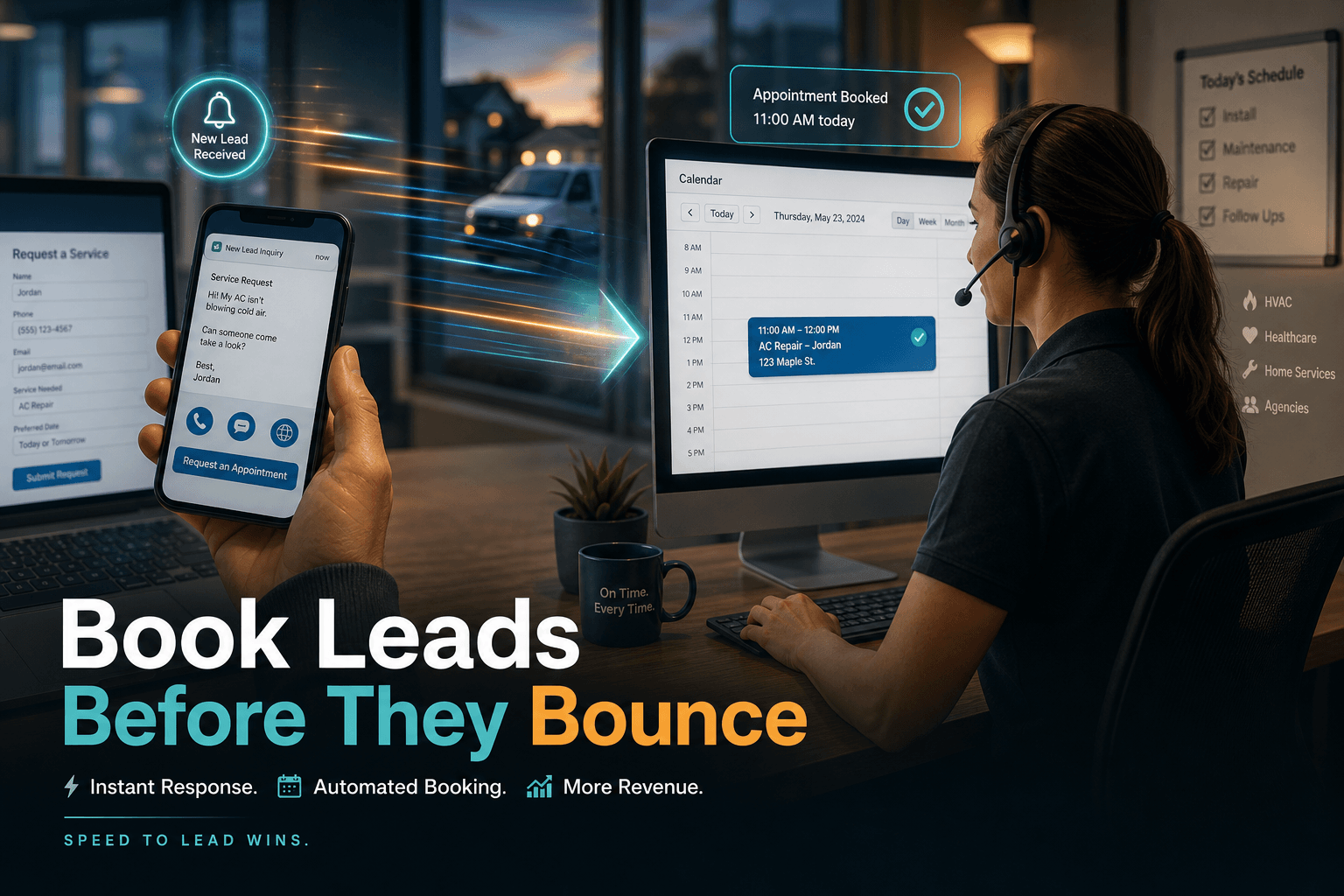
For a service business, we might map a new inquiry from website form to CRM record to first reply to appointment booking. Once the steps are visible, the waste tends to announce itself: a coordinator copies notes into the CRM, sales checks for duplicates manually, and a manager gets pinged for every edge case because routing rules live in someone’s head.
The proposed AI Automation may be smaller than expected. It could begin with extracting lead details, checking service-area rules, assigning an owner, and drafting a response for approval. No need to build a digital employee with access to the entire company on day one.
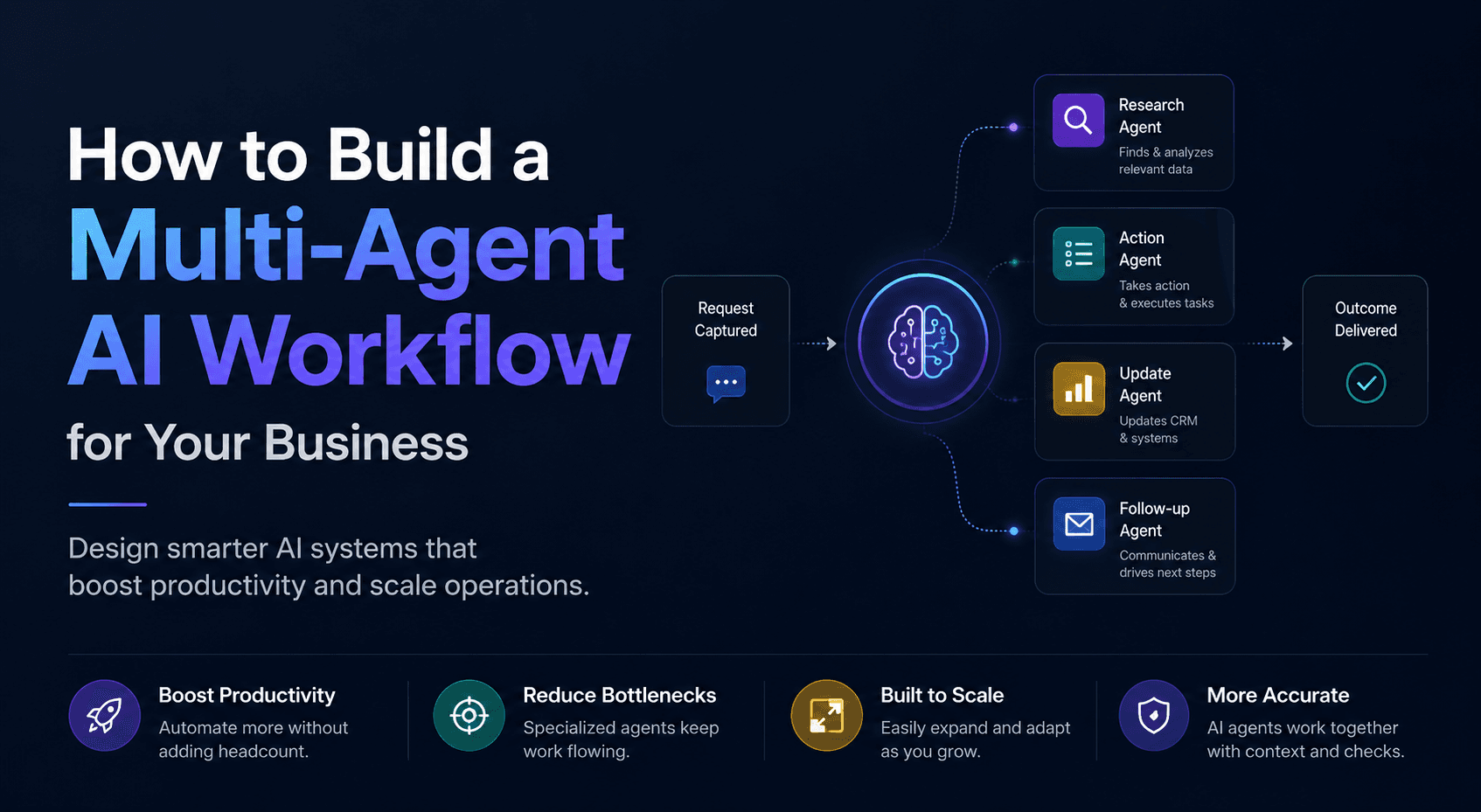
This is also where teams discover whether they need an assistant, Workflow Automation, or a multi-step agent system. For a closer look at routing logic, see how to design a lead routing system that sends every prospect to the right person.
2. The best first automation is often the least glamorous one
Nobody gets excited about standardizing fields. They should.
A consulting engagement often finds that the highest-return project is not a customer-facing chatbot or a shiny Voice AI experiment. It is the dull little process that happens 60 times a day: categorizing inbound requests, checking duplicates, updating lifecycle stages, or chasing missing information before a quote can go out.
That work creates the clean inputs every later automation depends on.
Consider a real estate team receiving leads from Zillow, its website, text messages, and phone calls. Before building personalized follow-up agents, the team needs one definition of a “new lead,” one owner field, one timestamp standard, and a rule for what counts as a qualified inquiry. Otherwise, the AI simply sends faster messages into a messy handoff.
A readiness audit should score opportunities using a practical filter:
Frequency × Manual effort × Cost of delay × Data reliability
The workflow with the biggest score is not always the most visible. It is the one where small improvements compound across the week.
We have found that CRM Automation projects often win early because they create cleaner records and reduce the quiet administrative drag that makes every sales process feel slower. Our guide to CRM Automation for teams that hate manual data entry shows why this foundation matters.
3. Audit data before promising AI anything
Here is the uncomfortable version: an AI Agent cannot reliably qualify leads when “budget,” “service type,” and “next step” are optional free-text fields filled out three different ways.
Data readiness is where many good ideas become bad builds.
A proper AI readiness audit does not ask whether the company has “lots of data.” It checks whether the specific workflow has usable data. Can the system access it? Is it current? Who owns it? Are important fields consistently populated? Can the agent tell the difference between a confirmed appointment and a tentative request?
Gartner found that 63% of organizations either lack or are unsure whether they have the right data-management practices for AI, and predicts that 60% of AI projects unsupported by AI-ready data will be abandoned through 2026.
For a lead qualification workflow, the audit might reveal that lead source is reliable but job value is not. That changes the build plan. Rather than inventing a fragile scoring model, the first phase may standardize intake questions and require a human review for high-value opportunities.
Clean structure beats clever prompting. For the practical mechanics, read why structured data is the secret ingredient in better AI automations.
4. Price the delay, not just the labor
Teams frequently calculate ROI by asking, “How many admin hours will this save?”
That is useful, but incomplete.
For lead-facing workflows, the bigger cost may be the delay between inquiry and response. For an agency, it may be the account manager who spends Tuesday morning assembling status updates instead of catching a client risk before it turns into a cancellation. For a home-services company, it may be the missed call that never receives a callback.
Consulting gives the team a way to put numbers around those consequences before choosing a build.
| Metric | Current state | Target after automation |
|---|---|---|
| First-response time | 47 minutes | Under 10 minutes |
| Lead-to-booking rate | 18% | 23% |
| Manual touches per lead | 6 | 2 |
| CRM records missing next step | 31% | Under 5% |
The table does not need to predict perfection. It needs to establish a baseline that the business can defend.
McKinsey’s 2025 research found that workflow redesign had the strongest effect on an organization’s ability to see EBIT impact from generative AI. In practice, that means the value case should include the redesigned work, not merely the model or software cost.
A good consultant will also tell you when ROI is too fuzzy to approve. That answer can sting. It is still cheaper than building a polished system nobody can justify keeping.
5. Don’t automate every exception on day one
This is where overconfidence gets expensive.
A team identifies a repetitive process and then tries to automate every weird case before launch: the VIP client, the unusual contract clause, the prospect who submits a form in Spanish at 2:00 a.m., the lead with an outdated address, the customer who needs an exception to the normal booking policy.
Soon, the “simple automation” has 47 branches and a temperament.
Consulting helps define a bounded first release. For example, an AI intake system may handle standard new inquiries, ask two approved follow-up questions, create a CRM record, and send uncertain cases to a shared review queue. It does not negotiate pricing, promise turnaround times, or make legal commitments.
That boundary is not a limitation. It is a quality-control mechanism.
The sensible rollout looks more like this:
Phase 1: Capture, classify, route, log
Phase 2: Draft responses and trigger approved follow-up
Phase 3: Add scheduling, enrichment, and exception handling
Phase 4: Expand autonomy only where measured accuracy holds
The important word is measured. Teams should review the first 50 to 100 outcomes, look for recurring failure patterns, then decide what the system earns permission to do next.
6. Make human review a design choice, not an apology
Human approval is often treated as proof that the automation failed. We see it differently.
The right review step protects the moments where judgment matters most: a high-value lead, a sensitive complaint, an unusual contract request, or a customer whose message signals urgency. It also gives the team a feedback loop for improving the workflow.
The trick is avoiding review theater. If an employee must approve every routine CRM update or every appointment confirmation, the system has simply created a new inbox with better branding.
Consulting helps set thresholds. A lead-scoring workflow might automatically route inquiries scoring below 40, place scores from 40 to 69 into a review queue, and notify a senior rep immediately when a score reaches 70 with strong intent signals. The model can explain which fields drove the score, so sales does not have to trust a black box with the pipeline.
Grant Thornton’s 2026 survey found that only 20% of organizations using, piloting, or scaling agentic AI had a tested incident-response plan for AI failures. That is a lot of automation with no practiced plan for the awkward moment when something goes sideways.
Review rules, escalation paths, and rollback procedures belong in the blueprint.
7. Build a roadmap that respects operational reality
A 12-month transformation plan can look impressive in a slide deck. It is less useful when the operations manager has no time to attend six workshops and the CRM migration starts next quarter.
Consulting should produce a phased roadmap based on business timing, technical dependencies, and the people required to run the workflow after launch.
A small agency might prioritize client-report preparation in phase one because it is self-contained and easy to measure. Next comes lead intake, once the team agrees on qualification criteria. Voice AI may wait until call dispositions and escalation rules are documented. That sequence prevents the business from building a front desk that cannot tell callers what happens next.
The roadmap should answer four questions for every initiative:
- What outcome changes if this works?
- What systems and data must be ready first?
- Who owns the automation after launch?
- What evidence tells us to expand, pause, or redesign it?
AI Agents work best when the underlying workflow has an accountable owner. Without one, problems bounce between sales, operations, IT, and “whoever set up that Zap.”
8. Use consulting to kill bad ideas early
Not every proposed automation deserves to be built.
That is one of the most valuable outcomes of AI consulting, even though it is not the answer people expect when they book the call.
Sometimes the process is too inconsistent. Sometimes the source data is unreliable. Sometimes the volume is too low to justify custom development. Sometimes a simple form revision, calendar rule, or CRM automation solves 80% of the problem without introducing an AI model at all.
The contrarian view matters because AI projects can fail long before launch. A 2025 Fivetran survey found that 42% of enterprises said more than half of their AI projects had been delayed, underperformed, or failed because of data-readiness issues.
A consultant should be willing to say, “Not yet.” Then explain what has to change first.
That might mean cleaning a CRM field, documenting a routing rule, collecting 90 days of baseline data, or giving the team one clear owner for approvals. Boring fixes, admittedly. Also the fixes that keep a promising workflow from becoming a costly abandoned pilot.
The Bottom Line
AI consulting is not a delay tactic before automation. Done well, it is how teams avoid building the wrong thing quickly.
The strongest projects begin with an operational problem that can be measured: slow lead response, manual qualification, inconsistent follow-up, buried customer requests, or reporting work that eats half a day every week. From there, AI-Automated can assess readiness, map the workflow, identify the right level of AI Automation, and build a phased system your team can actually run.
If you have a repetitive process that is costing time, leads, or patience, schedule a free consultation with AI-Automated. We will help you find the automation worth building first.